Google Ads can help a medical practice reach people searching for care, but clicks and inquiries alone do not tell you whether the investment works. To evaluate a campaign, compare advertising costs with the number of appropriate new patients who actually attend an appointment—and make sure patient information is handled responsibly.
Start with one service, your location, available appointment capacity and the value of a new patient. Then ask your advertising partner to explain which actions are measured and how they connect to your practice’s real results.
What is the real cost of a new patient?
Divide the advertising costs for a period by the number of new patients who completed a first visit and can reasonably be attributed to those ads. For a fuller acquisition cost, include relevant management fees and other campaign-related costs. The result is an estimate: some patients call later, see multiple marketing channels or do not identify their source.
Illustrative example: A practice spends $2,000 on ads and $500 on management. The campaign produces 40 inquiries, 20 booked appointments and 10 completed first visits by new patients. Ad spend per inquiry is $50; total campaign cost per completed new-patient visit is $250. These numbers are examples, not industry averages or a forecast.
If a completed first visit contributes $180 after direct care costs, that $250 acquisition cost is not covered by the first visit alone. Future visits might change the picture, but include their value only if the practice has reliable records and allows for overhead and profit.
Track each stage between an ad and a visit
A report should distinguish inquiries, bookings, attended visits and new patients. A call from an existing patient may be important to the practice but is not the same as acquiring a new patient. A booked appointment may be canceled or never attended.
Ask the front desk and your agency to agree on definitions: what counts as a qualified inquiry, how missed calls and duplicates are handled, and which visits count as new patients. Review aggregated figures by service and location where possible. Do not assume every call or form submission is a new patient.
Choose a service your practice can support
The best first campaign is not automatically the clinic’s most expensive service. Consider appointment availability, geographic reach, expected patient demand, insurance or payment requirements, and the contribution after direct costs. A campaign for a service with no open appointments can generate calls without useful growth.
For example, a primary care practice welcoming new patients may prioritize an available provider. A specialty clinic with a longer booking process may need to review inquiries and attended visits over a longer period. A multi-location practice should compare capacity and results by location rather than rely on one account-wide average.
What could a campaign cost for your practice?
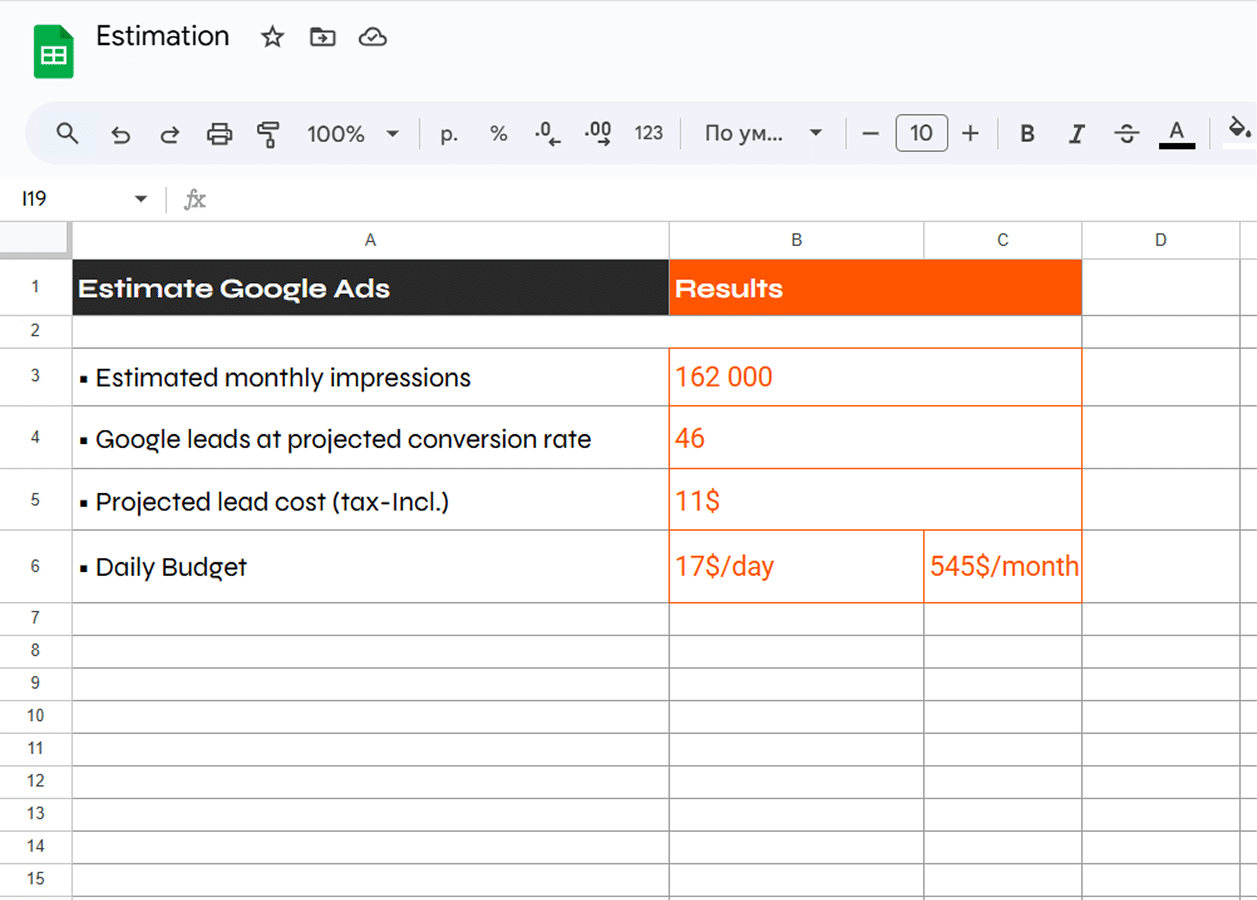
A national average cannot tell you what a patient will cost in your city. Competition, specialty, service area, response times and the patient journey all affect results. WEB ALTERNATIVE can prepare a free Google Ads forecast based on your services, location and goals, including estimated demand, budget, potential inquiries and cost per inquiry.
A forecast is an estimate, not a guarantee of appointments, patient numbers or revenue. Ask which assumptions it uses and review them as actual results become available.
Check the patient journey before increasing spend
Look at what happens after someone clicks. Does the page clearly explain the service, location, scheduling process and relevant payment information? Can visitors reach the practice on a phone? Are calls answered when the ads run? If the process makes booking difficult, more traffic may simply create more missed opportunities.
Compare missed calls, appointment availability and cancellations alongside campaign data. An agency can improve advertising, but the practice and its front desk also affect whether an inquiry becomes a visit.
Medical advertising and patient privacy
Healthcare advertising has special restrictions. Some services or products may require certification or may not be permitted. Google also limits how advertisers use sensitive health information in personalized advertising. Review the current healthcare and medicines policy and health in personalized advertising policy for your specific service and location.
Before adding analytics, call tracking or advertising tags, have the practice’s privacy and legal advisers review what data is collected and shared. Avoid putting patient health details into advertising reports or form fields merely to make attribution easier. The correct approach depends on the practice and the tools it uses.
A real clinic example: why tracking comes first
In one WEB ALTERNATIVE case, a South Carolina clinic was already advertising but could not reliably see which campaigns generated inquiries. Our team worked with developers to correct tracking and then reviewed irrelevant searches and campaign structure. The case shows why a practice should check measurement before judging whether to scale. Its results are specific to that project; the case does not establish a cost per attended new-patient visit for your practice.
Questions to ask a Google Ads agency
Ask your provider: Which services and locations will the forecast cover? What counts as an inquiry? How are missed calls, existing patients and duplicates handled? Can reports distinguish bookings from attended new-patient visits? What fees are separate from ad spend? Who will review privacy and Google policy requirements?
If your campaigns are already running, ask for a review of the account and measurement before committing to a larger budget. Learn more about our Google Ads services for medical practices and Google Ads audit. A brief initial review and a comprehensive paid audit are different services; ask which is appropriate for your situation.
Frequently asked questions
Is cost per lead the same as cost per new patient?
No. A lead may be an inquiry or call; a new patient has completed a first visit. Some inquiries do not book or attend, so the cost per attended new patient is generally higher when the same costs are used.
How much should a medical practice spend on Google Ads?
There is no universal amount. Start with the service and location, appointment capacity, local demand and the amount the practice can afford to spend to acquire a patient. A forecast can help test assumptions before you commit.
Can a practice measure advertising without sharing patient details?
A practice can consider aggregated reporting and a privacy-reviewed measurement plan. Which tools and data flows are appropriate depends on the situation; consult the practice’s privacy and legal advisers before implementation.
Should we increase the budget if calls are inexpensive?
Not necessarily. First check whether the calls are from suitable prospective patients, whether they book and attend, and whether the cost of acquiring a patient fits the practice’s economics and capacity.
Discuss your next step
Whether you are considering a first campaign or reviewing existing ads, we can discuss your goals, service area, measurement and options for a free forecast or consultation.