A commercial HVAC company can receive plenty of calls from Google Ads and still struggle to find the right customers. Homeowners, job seekers, and people looking for parts may all contact a company that wants installation or maintenance projects for businesses.
The answer is not simply to buy more clicks. Start by defining the projects you want, making that clear in your ads and on your website, and checking which inquiries become real business opportunities. Then assess the cost of those opportunities against the value of the work.
Why commercial HVAC companies get the wrong inquiries
Many people use similar words when looking for HVAC help. A homeowner with a broken air conditioner and a facility manager looking for a commercial maintenance provider may both search for HVAC services. An ad that does not clearly explain who the company serves can attract both.
The website matters too. If a visitor cannot quickly tell whether you work with commercial buildings, which services you provide, or where you operate, the wrong people may contact you while good prospects leave.
Not every irrelevant inquiry means the advertising is failing. But a steady pattern is a reason to review the searches, ad messages, service area, and page together.
Define a good lead before measuring results
A lead is someone who contacts your business. A qualified lead is an inquiry that meets the criteria you agree on with your team. For a commercial HVAC company, those criteria might include:
- A business, property manager, or organization rather than a homeowner.
- A building within your service area.
- A service you actually provide, such as system design, installation, or ongoing maintenance.
- A project size and timeline your company can realistically serve.
Agree on the definition before reviewing results. A small repair request may be a great lead for one company and a poor fit for another. Also decide how to classify an inquiry when the caller has not yet shared enough information. Do not count an unknown lead as unqualified just because the first call was brief.
Follow the numbers beyond the first call
A monthly report should show more than clicks and the total number of form submissions. Ask your team and agency to review the path from advertising to an actual opportunity:
- How much was spent on ads?
- How many calls and forms were received, and how many were genuine inquiries?
- How many inquiries fit your agreed criteria?
- How many became quotes or sales opportunities?
- How many became customers, and what was the value of the work?
The same definitions should be used each month. Ask whether duplicate inquiries, missed calls, spam, and existing customers are included. When a sale takes months to close, review recent lead quality alongside older opportunities that have had enough time to progress.
A simple example
Suppose a company spends $2,000 on ads and receives 20 inquiries. Eight fit its commercial criteria, and two become customers. The advertising cost is $100 per inquiry, $250 per qualified lead, and $1,000 per customer. These are illustrative numbers, not a forecast or industry average.
That $1,000 customer cost does not include agency fees or other marketing costs. Whether it makes business sense depends on the profit from the work, the cost of serving the customer, and any additional value from a continuing relationship. Revenue alone is not profit.
If only a few inquiries arrive, one sale can change the calculation substantially. Look at a longer period and the full sales pipeline before drawing a conclusion.
Check the message and the customer experience
Your agency should be able to explain how the campaign distinguishes the work you want from work you do not take. Ask what kinds of searches are bringing people in and whether the ads make your commercial focus clear. A visitor who clicks should land on a page that explains your relevant services, service area, and next step.
Look at what happens after someone contacts you as well. Are calls answered? Can your team identify the location, type of building, and requested service? Are qualified requests followed up? An advertising report alone cannot tell you why a promising project did not close.
If a large share of inquiries is irrelevant, ask for a review of the advertising and page. If inquiries are a good fit but few receive quotes or become customers, investigate the response process, pricing, capacity, and sales conversation too.
What a B2B HVAC case can teach us
In one WEB ALTERNATIVE HVAC case study, an engineering company wanted more business inquiries and fewer requests from individual consumers. Its earlier campaigns brought in mixed traffic, and incomplete call tracking made performance harder to assess.
The team reorganized the advertising around business services, clarified the commercial focus, and improved lead tracking. The published case reports a 1.5-times increase in leads, a lower cost per lead, and fewer irrelevant inquiries. The case does not specify the comparison period in its text, so those figures should not be treated as a monthly result or a prediction for another company.
Estimate the opportunity before you spend
If you are considering a new campaign or expansion into a new area, a forecast can help you discuss the likely budget, possible number of inquiries, and estimated cost per lead before committing to a plan. The estimate depends on your services, locations, competition, and available data; it is not a guarantee of leads or sales.
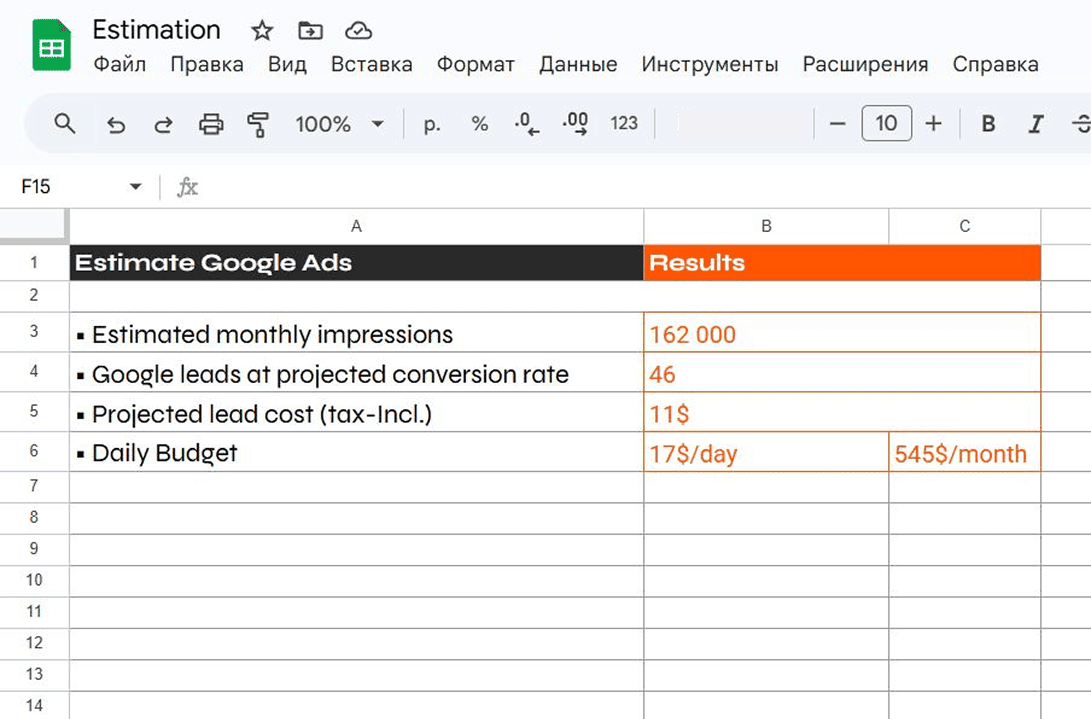
Request a free Google Ads forecast. If your existing campaigns already attract the wrong inquiries, a review of the current account and sales process may be a more useful starting point.
Questions to ask your Google Ads provider
- What counts as a qualified commercial HVAC lead for our business?
- Which services and locations are generating inquiries that fit that definition?
- How are calls, forms, duplicates, and missed inquiries counted?
- Can we connect qualified leads and sales outcomes to our advertising over time?
- What will we review before deciding whether to increase the budget?
A good answer should connect the advertising to your business goals and explain where the available data is incomplete. Learn more about PPC management services or the Google Ads audit.
Frequently asked questions
Can Google Ads work for commercial HVAC companies?
It can help a company reach people searching for relevant services, but results depend on local demand, competition, the offer, the website, and how inquiries are handled. A forecast and an honest review of your sales economics can help you decide whether a test is reasonable.
Why am I getting residential inquiries when I only serve businesses?
Your ads may be appearing for broad searches, or your message and website may not make the commercial focus clear. Review the actual inquiries and available search information before deciding where the mismatch occurs.
How much should a commercial HVAC company spend on Google Ads?
There is no single budget that fits every company. Consider the projects you want, the geographic area you serve, the likely cost of reaching prospects, and how many inquiries typically become customers. When those figures are unknown, treat a forecast as an estimate and update it with actual results.
Is a low cost per lead always a good result?
No. A low-cost inquiry has limited value if it is outside your service area or needs work you do not provide. Compare cost per qualified lead and, when enough sales data is available, cost per customer and profit from the work.
How long does it take to know whether the ads are working?
There is no universal timeline. The number of inquiries, seasonality, project size, and length of your sales process all matter. Review early signals such as lead relevance and response handling, then assess completed sales after prospects have had enough time to make a decision.
Talk about your goals
Tell us which commercial HVAC services you want to grow and where you operate. WEB ALTERNATIVE can discuss your current advertising or prepare a free forecast for a potential campaign.
Schedule free marketing consultation
Learn how to stop wasting ad spend and turn marketing into real profit.