A seasonal business does not have to run Google Ads at the same level all year. The right decision depends on when customers search, what you can sell in quieter months, and whether your team can handle more work. Some businesses benefit from a smaller campaign between busy seasons; others may have a good reason to pause.
Start with your own demand, capacity, and profit per job. Then decide what each part of the year needs to accomplish.
Why a steady monthly budget can miss the real opportunity
Customers do not always start looking for a service when the work is performed. A facility manager may request proposals months before a planned installation, while an urgent repair customer may need help today. These searches can have different value, lead times, and competition.
If you spend the same amount every month, you may run short during a busy period or keep paying for inquiries your team cannot serve. Equal monthly spending can still be appropriate when demand and capacity are stable. The point is to make the decision using your business data.
First, map demand and capacity together
Review when inquiries arrive, when customers book, and when work is actually completed. Look at more than one year where possible: a weather event, an unusually large contract, or a staffing change can make one season misleading.
Ask your sales and operations teams what happened during each period. Which services were requested? How far in advance did people book? Were there weeks when you could not take new jobs? A campaign that produces leads when your schedule is full may not be the best use of that budget.
Then separate your year into three practical periods: preparation before demand rises, the busy season, and quieter months. The dates will depend on your services and location, not on a generic calendar.
Before the busy season: attract people who plan ahead
Some customers compare providers before they are ready to schedule work. Advertising ahead of a busy period may help you reach them while they are collecting estimates. The offer and landing page should match that stage: explain the service, the area you cover, and how to request a consultation or estimate.
Allow time for your team to respond and for prospective customers to make a decision. If you are considering a new service or location, start planning before you need the first job. The necessary lead time differs by business.
During the busy season: protect both budget and service quality
When demand rises, review whether your ads are reaching enough suitable prospects and whether your staff can answer calls, follow up, and deliver the work. More traffic is not necessarily useful if the schedule is already full or calls are going unanswered.
Ask your agency which services, locations, or customer types produce the right opportunities. Compare advertising spend with qualified inquiries and booked jobs where those results can be tracked. If you expand the budget, agree on the amount and review results as the season develops.
During quieter months: decide what remains worth promoting
A quiet period is not automatically a reason to turn advertising off. Customers may still need maintenance, inspections, repairs, or early estimates. If you have a relevant offer and capacity to deliver it, a smaller campaign may be worth testing.
On the other hand, if your service is unavailable, there is too little demand, or the cost of attracting a customer does not make financial sense, a pause can be reasonable. There is no universal minimum budget that every seasonal business should keep running.
How to decide how much to spend
Consider your available capacity, average job value, costs, and the share of inquiries that typically become customers. Set a maximum acquisition cost that leaves room for your operating costs and profit. If your records are incomplete, begin with a range and refine it as you learn.
For example, imagine a company has $2,000 available for a particular month. Its forecast estimates a range of 10 to 20 inquiries. That suggests an estimated ad cost of $100 to $200 per inquiry. This is an illustrative calculation, not a prediction or guarantee. The company still needs to assess lead quality, conversion to customers, and the profit from completed work.
What to review with your agency each month
- Demand: Are more or fewer suitable customers looking for the service?
- Capacity: Can your team answer inquiries and take the work?
- Lead quality: How many inquiries fit your services, location, and customer requirements?
- Costs: What did you spend, and what was the cost per qualified inquiry where that data is available?
- Next decision: Should you increase, maintain, reduce, or pause spending, and why?
Google recommends using past performance and planning seasonal campaigns in advance. Its seasonal campaign guide offers a starting point. Your own business records remain essential to interpreting the numbers.
In a WEB ALTERNATIVE HVAC case study, an engineering company wanted more relevant business inquiries and had incomplete call tracking. The team reorganized its campaigns and improved measurement. The published case reports 1.5 times more leads and a lower cost per lead, without specifying the comparison period. It is an example of the importance of matching campaigns to business goals, not evidence of a seasonal result or a forecast for another company.
Plan your budget before the next season
A forecast can help you discuss the potential ad budget, inquiry volume, and cost per lead for your location and service before launching or expanding a campaign. It is an estimate based on available information, not a guarantee of results.
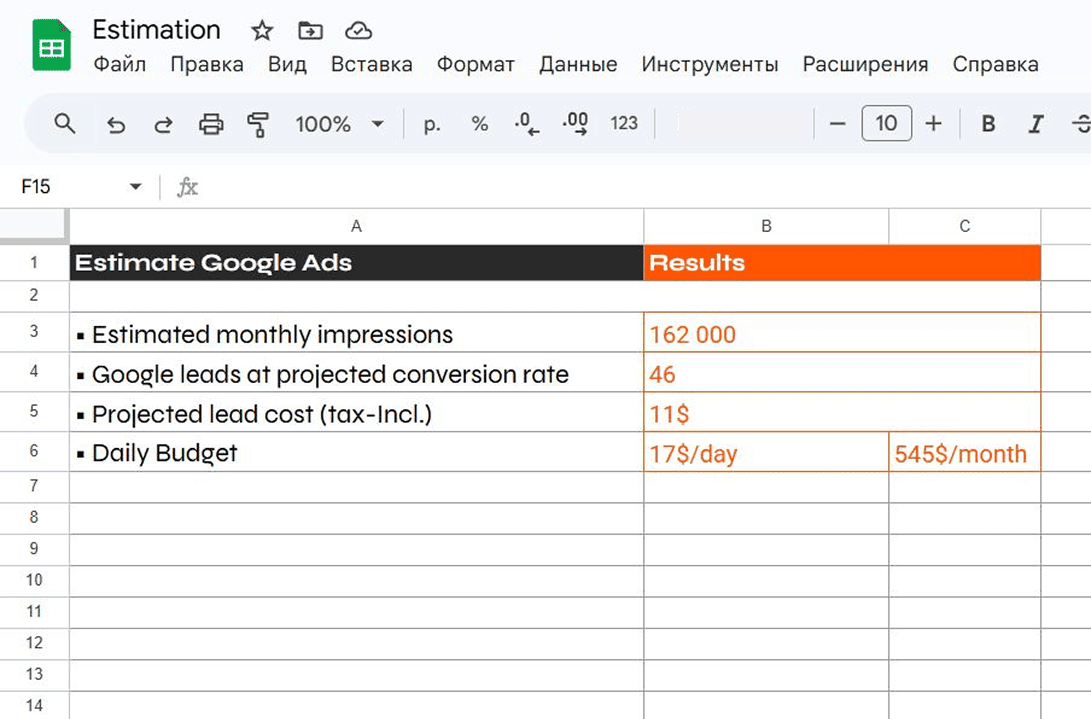
Get a free Google Ads forecast or talk with our team about your seasonal goals. For an existing account, you can also ask about a brief initial review or a full paid Google Ads audit.
Frequently Asked Questions
Should I pause Google Ads in the off-season?
It depends on whether there is worthwhile demand, an appropriate service to promote, and enough capacity to serve customers. Review the economics and your sales data with your agency before deciding.
How early should I advertise before my busy season?
There is no fixed lead time for every business. Look at how far in advance your customers research and book, how long your sales process takes, and how much preparation your campaign and website need.
Will a higher budget always bring more leads?
No. The result also depends on available demand, competition, the relevance of the campaign, the website, and how inquiries are handled. An estimate is a planning tool, not a promise.
How do I measure success if customers book months later?
Track inquiries by the period they arrived and record which later became estimates, bookings, or sales. Keep open opportunities separate from closed results so you do not judge recent campaigns before customers have had time to decide.
Can I promote different services throughout the year?
Yes, if those services fit your business and customers actually need them. Review the demand, profitability, staff availability, and customer journey for each service before allocating budget.
Schedule free marketing consultation
Learn how to stop wasting ad spend and turn marketing into real profit.