Google Ads can help a chiropractic practice reach people looking for care, but there is no budget that fits every clinic. The right starting point depends on local demand, the services you offer, your schedule, and what you can afford to spend to attract a new patient.
Before choosing a monthly amount, look beyond the cost of a click. A useful plan connects advertising costs to inquiries, booked appointments, visits, and the value of the care your practice provides.
Start with capacity and the patients you want to reach
Consider how many new patients your practice can realistically see, which services have availability, and how far people are likely to travel. A clinic with a full schedule may need a different plan from a new practice looking to fill appointments.
Also consider the fit between your offer and the patient’s needs. A low-cost inquiry is less useful if the person lives outside your service area, needs a service you do not provide, or cannot book at an available time.
Separate ad spend from the total marketing cost
Your ad budget is the amount paid to Google for advertising. It is not necessarily the full cost of the program. Depending on your arrangement, campaign setup, management, website work, and other tools may cost extra. Ask for a clear breakdown before agreeing to a budget.
Local competition, search demand, and the services you promote can all affect costs. Published benchmarks can provide context, but they cannot tell you how much your own practice will pay or how many patients it will gain.
Follow the path from inquiry to first visit
A lead is an inquiry, such as a call or form submission. It is not the same as a booked appointment or a patient who actually visits. To understand whether a campaign makes business sense, compare these stages over the same period:
- Ad spend and, separately, relevant management costs.
- Genuine new-patient inquiries, excluding duplicates and unrelated requests.
- Appointments booked and first visits completed.
- Revenue and the costs of providing care, where your records allow a reliable comparison.
For example, if a practice spends $1,000 on ads and ten new patients attend a first appointment, the ad cost per first visit is $100. If an additional $300 management fee relates to the same period, the combined cost is $130 per first visit. This is a hypothetical illustration, not a benchmark. Match costs and patients to the same campaign and period; delayed bookings and incomplete attribution can affect the result.
To judge affordability, compare the cost of acquiring a patient with the revenue you actually collect over a defined period, minus the costs of providing care. Leave room for overhead and the profit your practice needs. For example, $600 collected less $180 in variable costs leaves $420 before advertising and overhead. If acquisition costs $130, $290 remains before overhead and other costs. These figures are hypothetical, not a prediction. Use your own records and avoid assuming patients will complete a particular treatment plan.
Know your numbers before you spend
A forecast can help you decide whether the potential demand and cost fit your goals before launching. WEB ALTERNATIVE prepares a free Google Ads forecast based on your services, location, and goals. It can estimate search demand, budget, inquiries, and cost per lead. The forecast is an estimate, not a promise of patients or revenue.
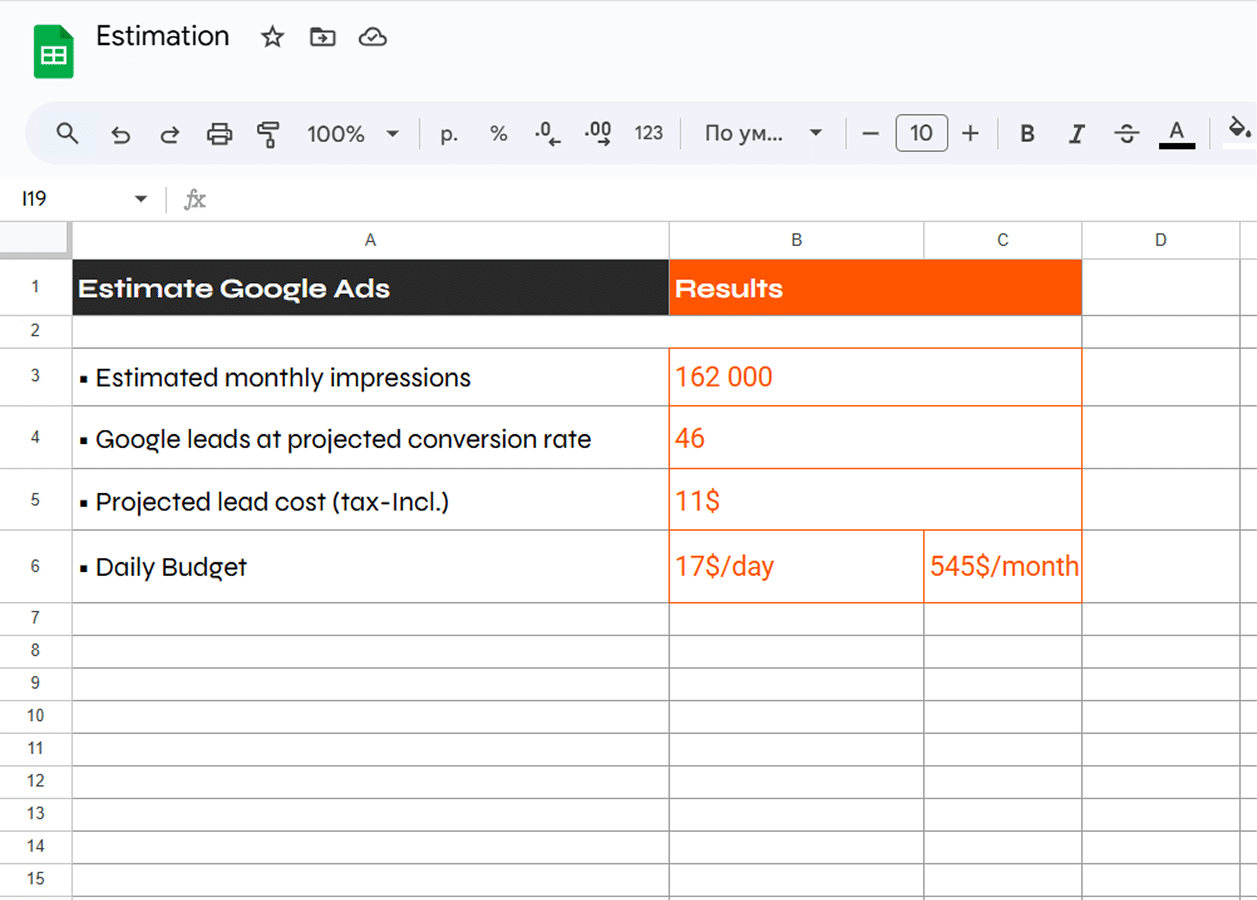
Get a free Google Ads forecast
What a chiropractic campaign review can reveal
A budget decision is only as reliable as the information behind it. In one WEB ALTERNATIVE chiropractic clinic case, one form submission was being counted twice. Broad location settings also attracted people who were less likely to travel to the clinic. The team corrected tracking and refined the campaign’s geographic focus and messaging.
The case reports 262 leads and $5,783 in ad spend from August 5 to November 20; the year is not specified. These are reported leads, not confirmed new patients. The results describe one project and should not be treated as a forecast for another practice.
Make room for privacy and advertising rules
Healthcare advertising requires care with both claims and patient information. Google restricts certain types of audience targeting for health-related content under its health in personalized advertising policy. Whether a specific ad or audience is affected depends on its content and setup.
Review your advertising claims, website, tracking tools, and handling of patient information with the appropriate privacy and legal professionals. Do not assume a remarketing approach suitable for another business is appropriate for your practice.
When should you change the budget?
Look at the complete patient journey before increasing spending. If calls go unanswered, appointment availability is limited, or reporting includes duplicate inquiries, more traffic may make those problems more expensive. If inquiries are relevant, the practice can respond, and the cost of an attended visit fits your economics, a measured increase may be worth considering.
If results are unclear, ask your agency to explain what is counted, where inquiries come from, and what is known about bookings. Small numbers can change sharply from month to month, so avoid drawing a firm conclusion from a handful of leads.
Frequently asked questions
Is there a minimum Google Ads budget for a chiropractor?
There is no universal minimum that guarantees useful results. Local demand, competition, your goals, and your ability to follow up all matter. A forecast can help assess whether a proposed budget is realistic for your market.
Should I count every phone call as a new patient lead?
No. Calls may include existing patients, vendors, wrong numbers, or duplicate inquiries. Agree on a practical definition of a new-patient inquiry and review how it is counted while protecting patient privacy.
What if inquiries are coming in but appointments are not?
Review whether people are seeking services you provide, whether they can reach the practice, and whether appointment times, location, pricing, and insurance information are clear. Advertising is only one part of the booking process.
Can a practice predict exactly how many patients ads will bring?
No. A forecast is a planning estimate based on available information. Actual results depend on market conditions, patient decisions, campaign performance, and your practice’s ability to respond and book appointments.
Plan your next step
Whether you are considering a first campaign or reviewing existing ads, start with the economics and the patient experience. Learn more about our Google Ads services for medical practices or request a free consultation about your goals.
Schedule free marketing consultation
Discuss your practice goals and get a free Google Ads forecast.