
Lighting Equipment Ecommerce Website Design Case Study
TEXO is a company specializing in the sale of lighting equipment in both B2B and B2C segments.
The client approached us with an ambitious task: to create a project that could compete with major market players and become a fully-fledged platform for purchasing lighting equipment.
At the start, the client had the idea of creating a modern B2B portal; however, the concept of the future project was not yet fully formed. It was necessary to define the online store structure, key functionality, user scenarios, and a strategy for further development.
Therefore, the client entrusted us with working through the project from scratch—from creating a brand identity and conducting market research to preparing the technical foundation for the future online store.

Our objectives included
Workflow
What Needed to Be Resolved Before Development Started
Determine the Format of the Future Online Store
At the start, only the general direction of the project was clear. We had to determine what the future online store should be: what tasks it would solve, which audience it would serve, and how users would interact with the website.
Establish the Brand Foundation
The project was created from scratch: at the beginning, there was no brand identity, positioning, or unified visual system. Therefore, the first stage was developing the TEXO brand, which would later serve as the foundation for the website, advertising, and other communication channels.
Design the System with Scalability in Mind
The client plans to actively grow the business and expand the product range. Thus, as early as the design phase, we laid down a structure that would allow connecting new product categories, integrations, and additional services for B2B clients without major rework.
Market Research
Prior to starting the design process, we conducted market research on the lighting equipment market. It was crucial for us to understand the industry specifics, the needs of future clients, and determine how TEXO could stand out.
As part of the research, we:
• Analyzed the lighting and electrical equipment market;
• Studied the websites and digital solutions of leading companies in the industry;
• Identified the strengths and weaknesses of existing solutions;
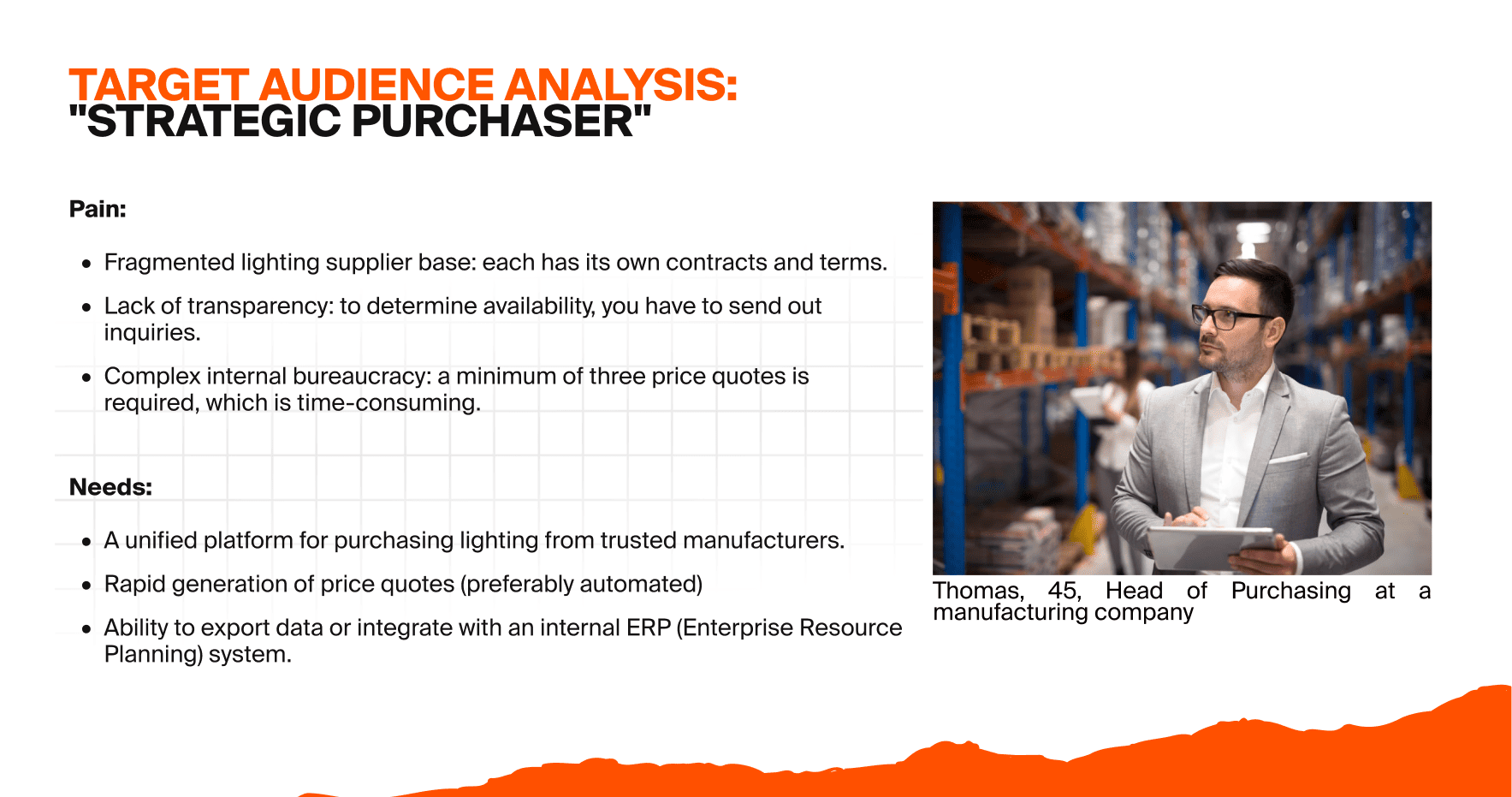
• Researched the needs of B2B and B2C audiences;
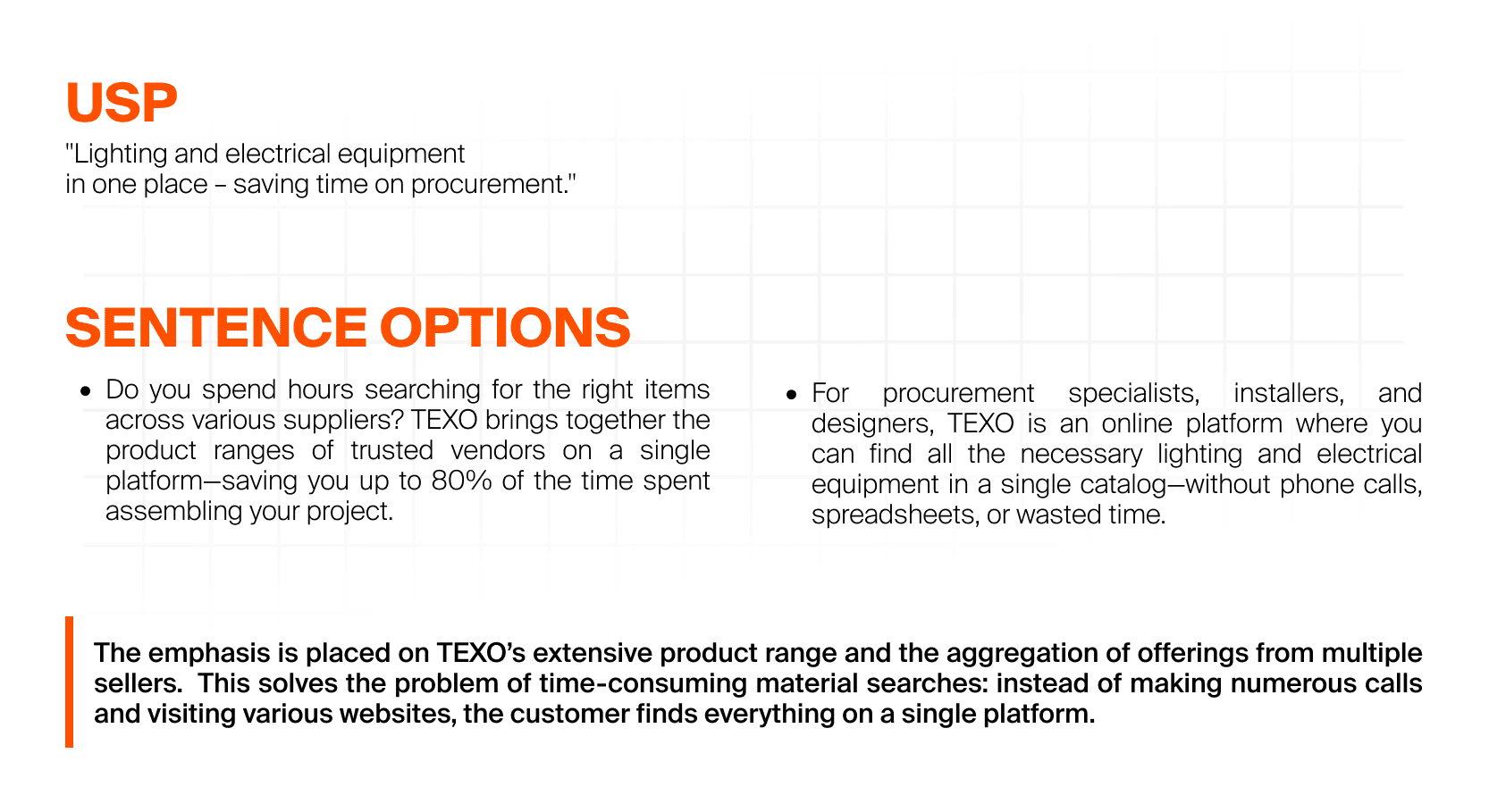
• Developed positioning options and USPs;
• Defined the requirements for the future online store.
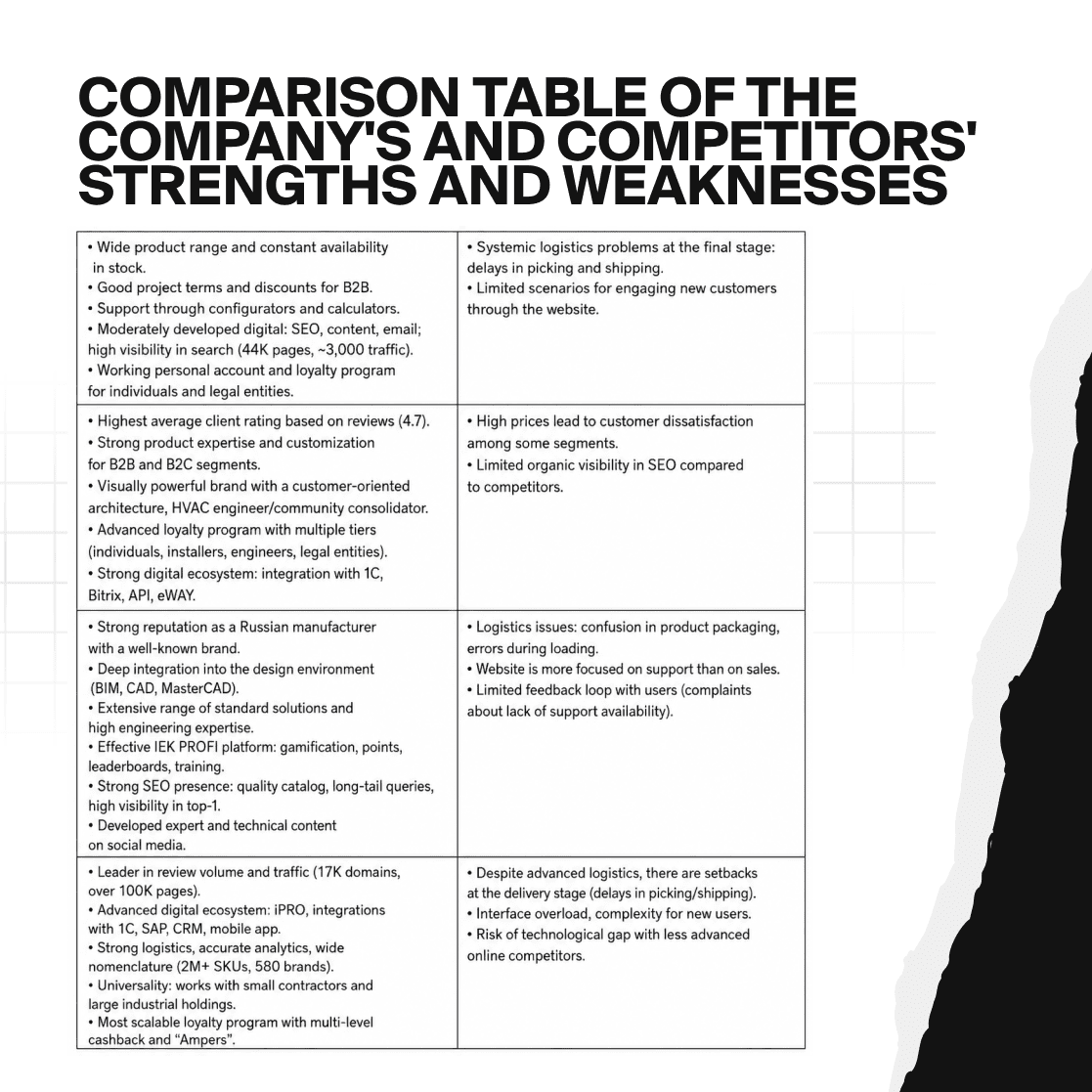
The research also helped us better understand target audience expectations. For clients, not only prices and range matter, but also convenience in working with the supplier: fast retrieval of information, transparent terms of cooperation, and time savings when selecting products.
Based on market and audience analysis, we formulated several positioning options and USPs for TEXO. This allowed us to determine the competitive advantages that would enable the brand to compete with major market players.
All conclusions from the research formed the basis of the website structure, functional requirements, and subsequent technical specification.
Brand Identity Development
In parallel with the research, the TEXO brand book was developed.
The main task was to create a modern and versatile visual style that would be equally well received by both corporate clients and retail buyers.
At the core of the concept:
• A light visual style;
• Signature corporate colors;
• Minimalist design;
• Emphasis on ease of information perception.
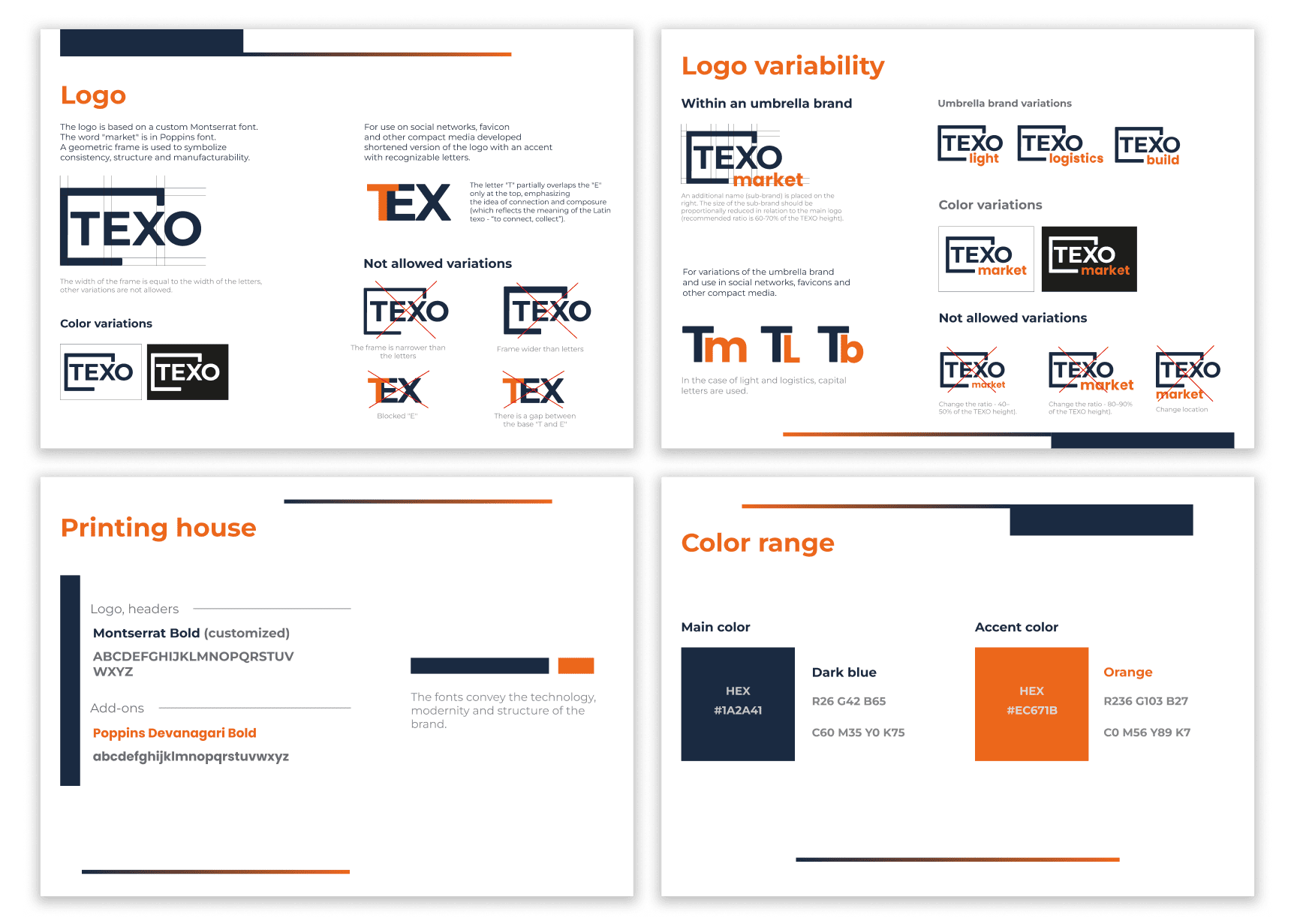
This approach maintains a balance between modern visual appeal and a professional business presentation of the brand.
Functional Specification (Technical Task) Development
After completing the analytical stage, we proceeded with preparing the functional specification. At this stage, we documented the project structure, user scenarios, section business logic, and key functionality of the future online store.
Special attention was paid to opportunities for further scalability and integration with third-party services. It was at this stage that the foundation for the future project was formed.
Website Structure Development
The foundation was built on the classic structure of a modern online store:
• Home page;
• Product catalog;
• Category pages;
• Product cards;
• Information sections;
• Shopping cart and checkout.
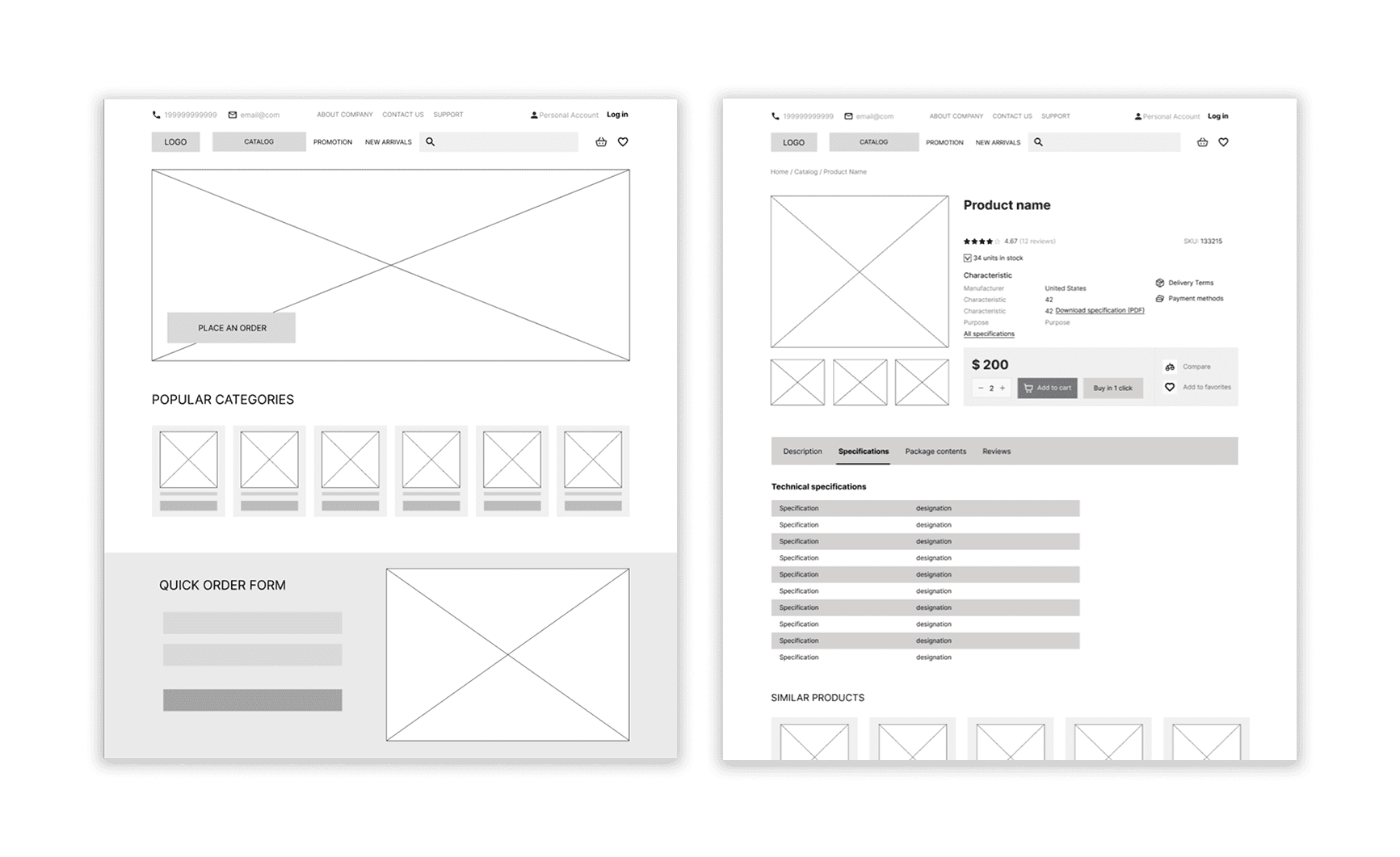
Separately, two types of personal accounts were provided: for B2B and B2C clients.
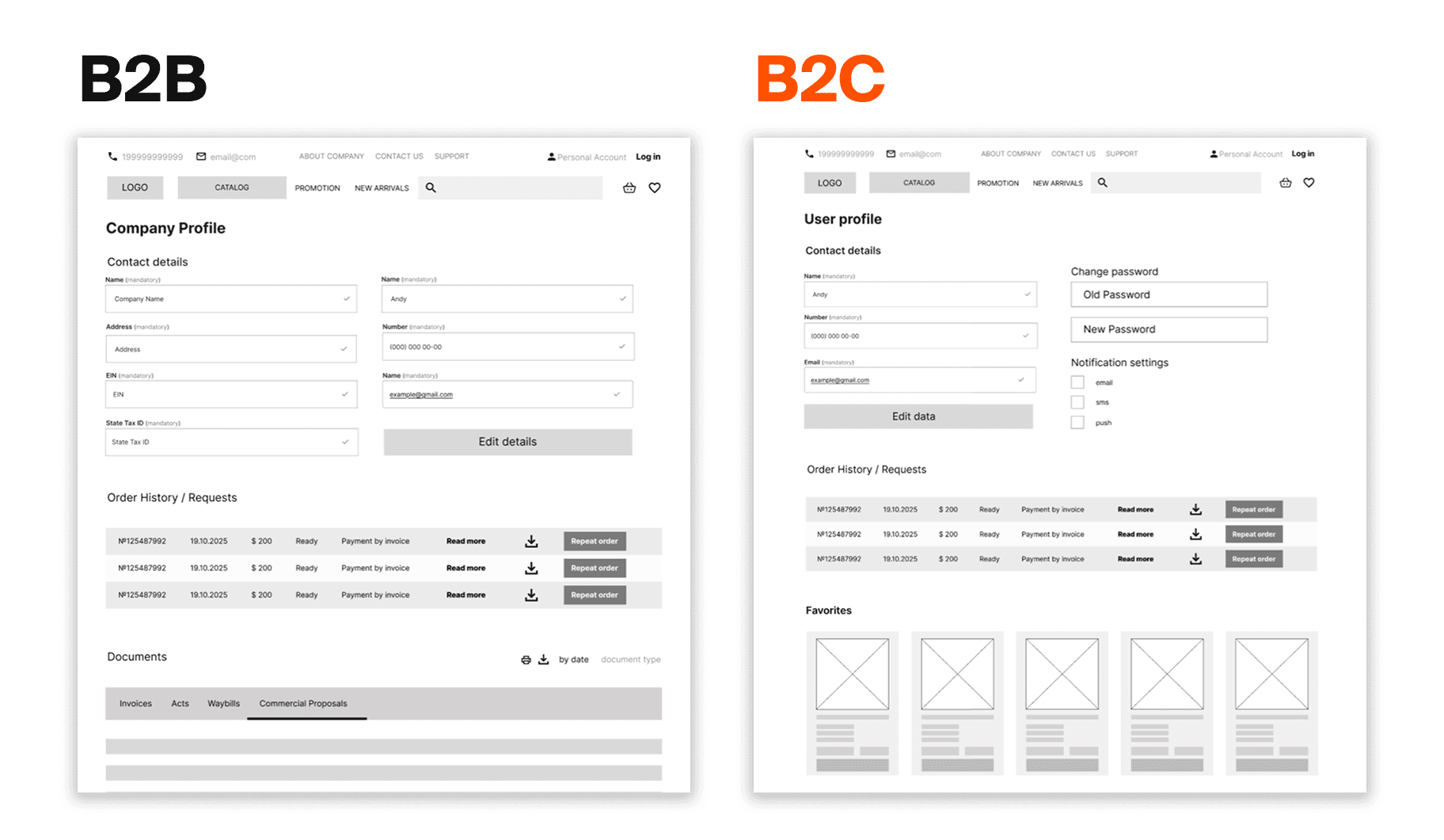
The structure is organized so that users can quickly find the required products and access necessary information without redundant actions.
Web Design Development
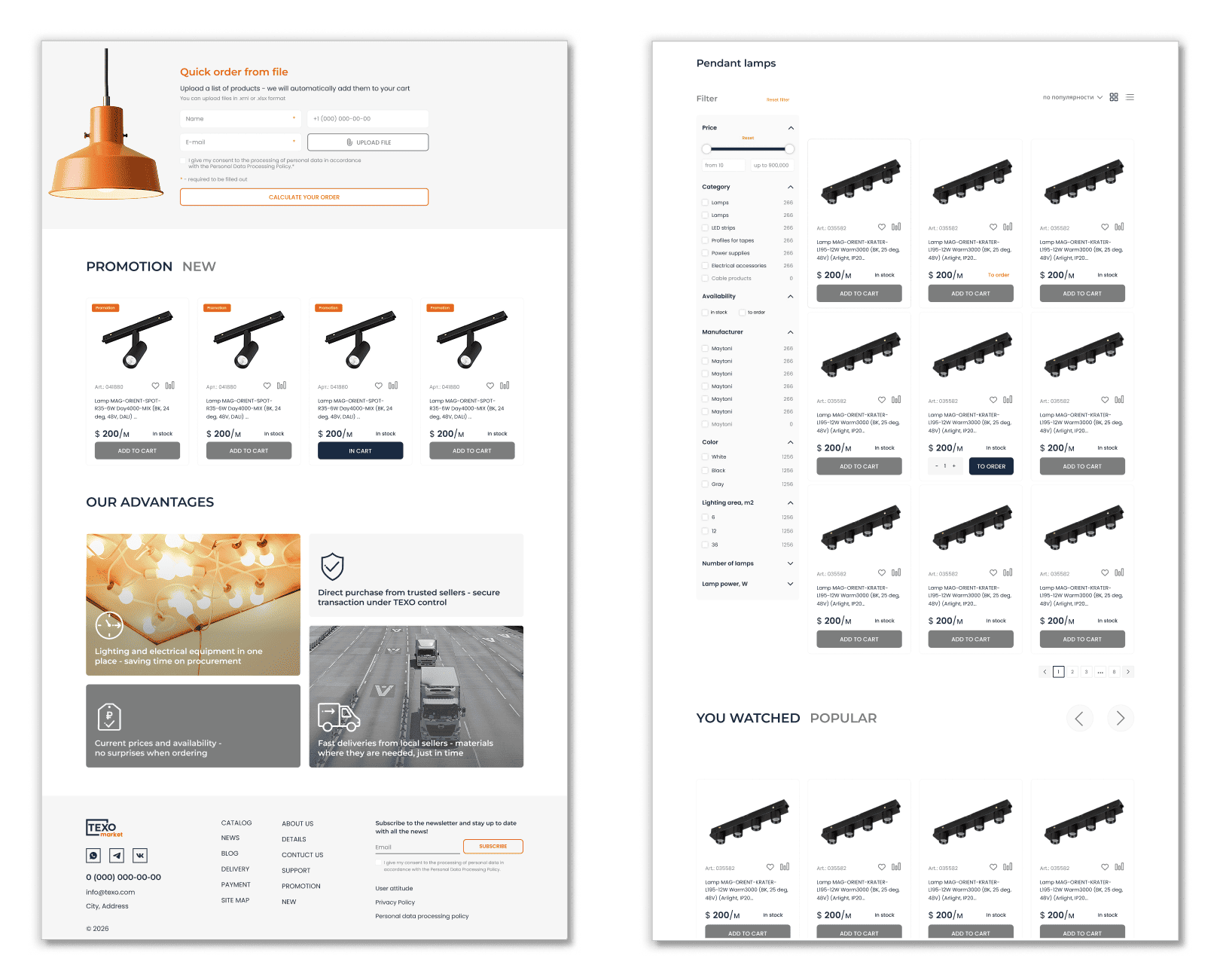
When creating the design, we focused on ease of use with the catalog and a large volume of products. Market research results showed that one of the main problems with competitors’ websites was interface overload—users found it difficult to locate necessary items, compare specifications, and quickly place orders.
Home Page and Catalog
The home page is built to allow users to quickly navigate to the desired product category and start searching without extra actions. Main emphasis was placed on the catalog and navigation. The first screen immediately provides access to popular sections, product search, and quick links to main categories.
When developing the catalog, we paid special attention to convenience when working with a large number of products. The category structure is clear and logical, while the product cards are light and easy to read and compare.
A light design with plenty of white space helps users find necessary information faster without feeling overwhelmed, even when browsing an extensive product range.
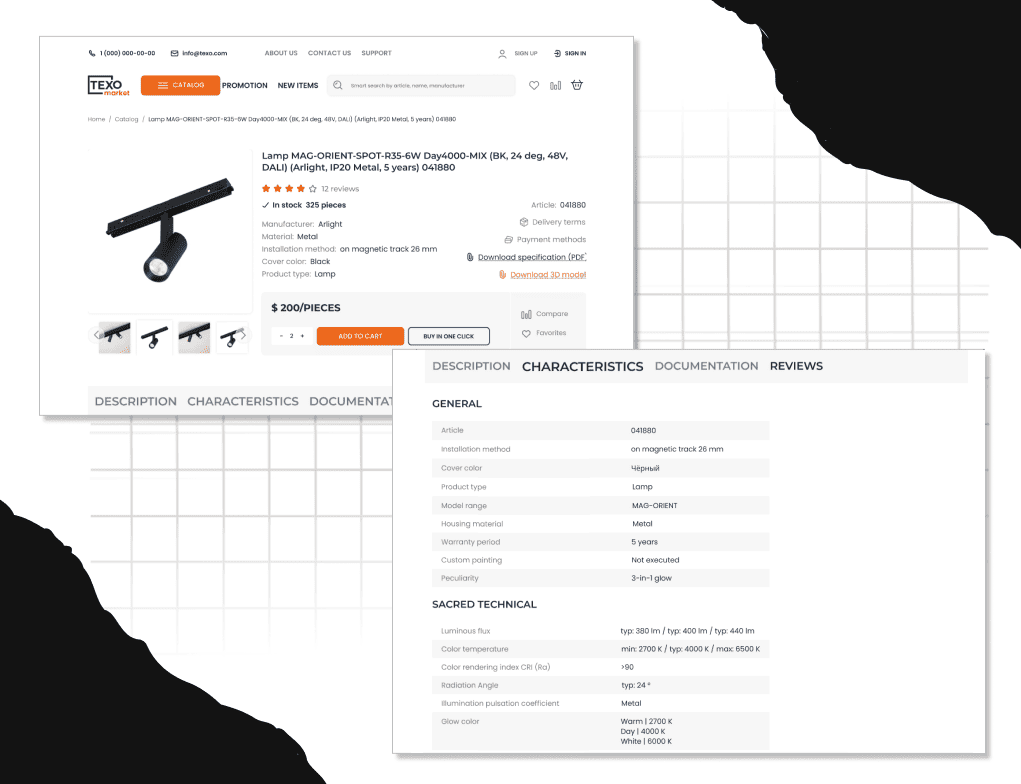
Product Card
The product card was designed so that users could make a purchase decision without searching for information across different sections of the site.
All key data is gathered on a single page: price, availability, specifications, documentation, and purchase options. Particular attention was paid to technical parameters.
This approach is especially important for B2B clients who regularly deal with a large amount of equipment specifications.
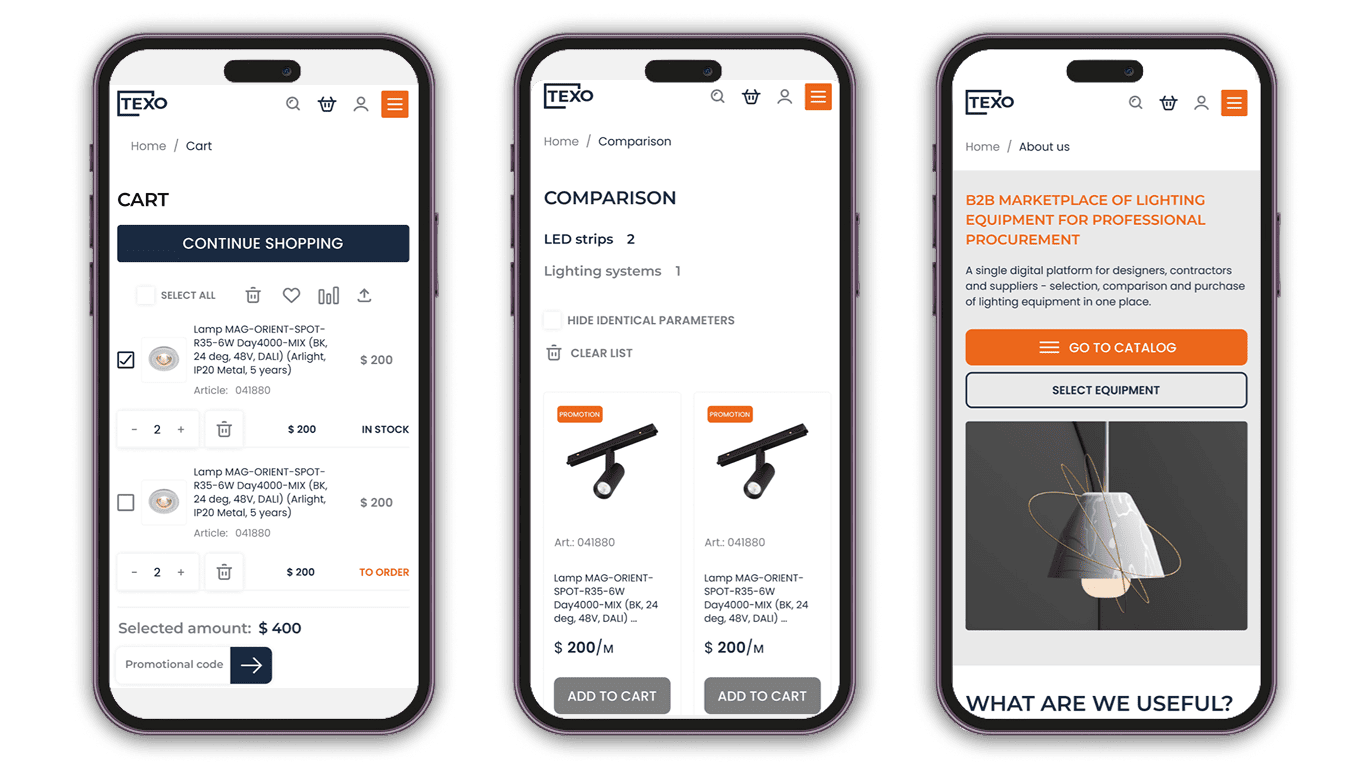
Mobile Version
We designed the mobile version as a separate usage scenario.
We retained quick access to the catalog, search, product comparison, and shopping cart, while making the interface simpler and more convenient for smaller screens.
As a result, users can select equipment, review specifications, and place an order from a smartphone just as comfortably as from a computer.
Summary
This project demonstrates that the development of a large online store begins long before the coding stage.
When a business plans to scale, it is crucial to define brand positioning in advance, study the market, map out user scenarios, and lay the technical groundwork for future growth.
For TEXO, we created a complete foundation for a future digital platform: from market research and a brand book to the online store structure and functional specifications. This approach minimizes risks during development and yields a product ready for scaling in both B2B and B2C segments.
Schedule free marketing consultation
Learn how to stop wasting ad spend and turn marketing into real profit
Start growing your business today with WEB ALTERNATIVE
Ready to stop wasting budget and start seeing real ROI?
Tell us about your project — and get a free forecast