Google Ads can help a truck repair shop reach people looking for service, but a low cost per call does not tell you whether the campaign makes money. Compare ad spending with qualified repair requests, completed jobs, and the profit those jobs can reasonably produce. Separate urgent one-time repairs from fleet opportunities: they have different value and may take different amounts of time to become customers.
Start with the work your shop wants
A driver with a disabled truck needs a fast answer. A fleet manager may be looking for a shop that can maintain multiple vehicles. Both can be valuable, but they need different information and may be worth different amounts to your business.
Before deciding on a budget, identify the jobs you can handle profitably, the vehicles you service, the areas you cover, and the hours someone can answer the phone. If you offer mobile service, explain where you can travel. If you operate from a shop, make your location and capabilities clear. Advertising cannot fill a bay that is already full or turn an unavailable service into a suitable job.
Know what a customer can be worth
Use your own records to estimate the revenue and direct costs of the jobs you want. The difference helps you judge how much room you have to pay for a new customer. Include other acquisition costs, such as management fees, and allow for overhead and the uncertainty of repeat work.
For a simple illustration, suppose a shop spends $2,000 on ads and earns four completed jobs from those ads. Advertising cost is $500 per job. If each job brings in $1,000 in revenue and has $600 in direct job costs, the $400 left per job does not cover the $500 advertising cost, let alone overhead or management fees. These are hypothetical figures, not industry averages or a forecast. Repeat work could change the economics, but count it only when your own records support the assumption.
Calls, qualified requests, and completed jobs are different
A call may be a wrong number, an existing customer, a request outside your service area, or a genuine repair opportunity. A qualified request is one your business can potentially serve. A completed job is a further step. Agree on these definitions with your team before comparing reports.
Review ad spend alongside the number of qualified requests, booked jobs, completed jobs, and the revenue and direct costs associated with them where available. A campaign with more calls can still be less useful if few callers need the work your shop provides. A smaller campaign may be more valuable if its requests become profitable jobs.
Ask who answers calls, whether missed calls receive a response, and how the team records the outcome. Check whether your tracking counts repeat calls or other actions as separate leads. Google Ads conversion reporting depends on the actions a business chooses to measure; a reported conversion is not automatically a sale. Google explains conversion tracking here.
Separate roadside work from fleet opportunities
Someone requesting roadside help may need an immediate decision about location, vehicle, and availability. A fleet manager may want to discuss maintenance capacity, scheduling, and service terms. A single average cost per lead can hide these differences.
Where your records allow, compare these groups separately. Note the service requested, whether the caller fits your coverage and capabilities, and what happened after the first contact. A fleet opportunity may require several conversations, so avoid treating an open discussion as a lost sale simply because it did not close immediately.
For a related transportation example, see how WEB ALTERNATIVE structured ads around an auto carrier’s routes and available capacity. That project involved vehicle transport, not truck repair; its results should not be treated as a forecast for a repair shop.
Estimate the numbers before spending more
WEB ALTERNATIVE can prepare a free Google Ads forecast based on your services, geography, and goals. It may include estimated demand, ad budget, potential leads, and cost per lead. The forecast is an estimate, not a guarantee of inquiries, jobs, or profit.
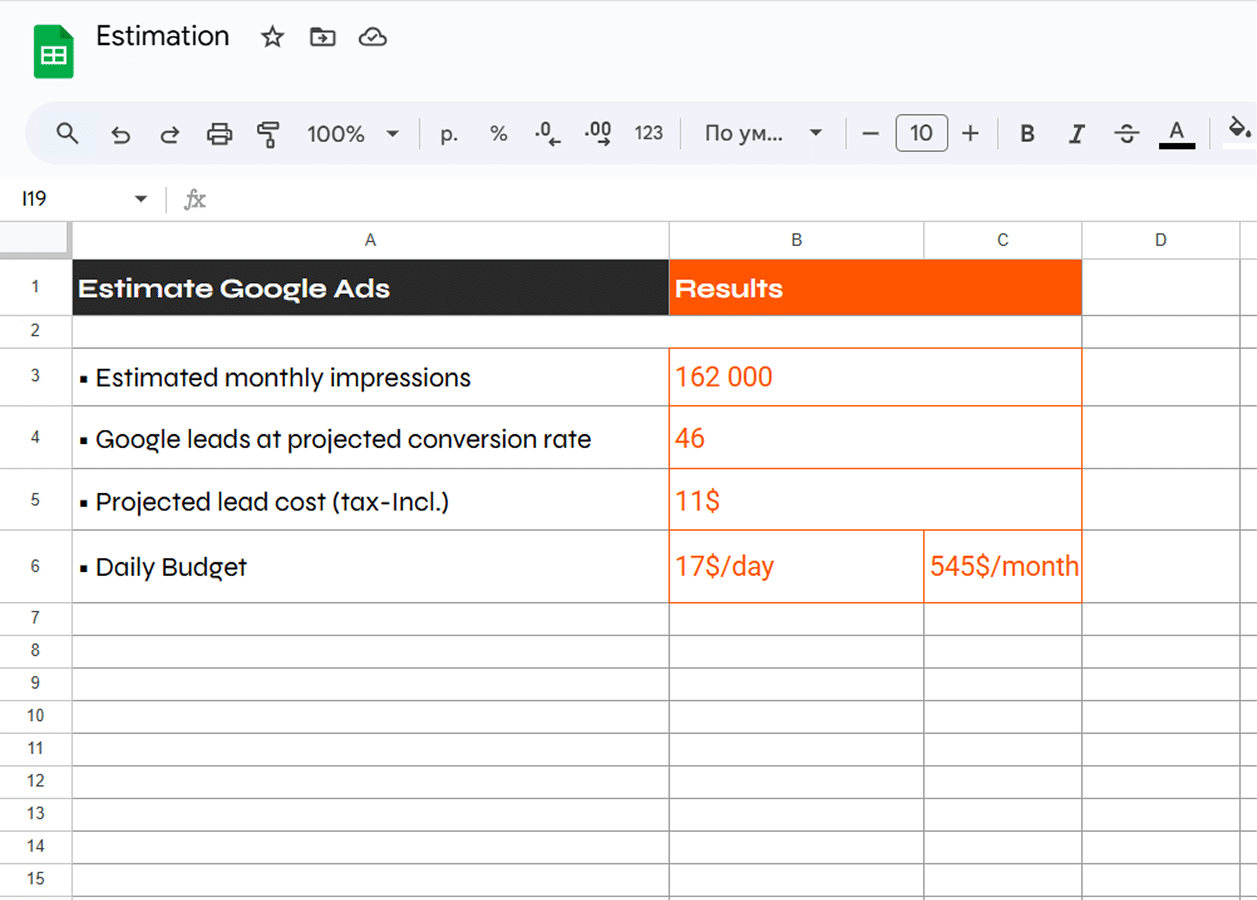
What if the calls are not turning into jobs?
Look at the full path before drawing a conclusion. Are callers asking for work you offer? Can they reach someone during advertised hours? Does the website explain the service area and capabilities? Are estimates accepted, or do prospects decline after discussing timing or price?
These questions can point to different issues in the advertising, website, service capacity, or sales process. If you already advertise, a Google Ads management review can help you understand what to investigate. A brief free look and a full paid audit are different services; discuss the scope before choosing one.
Frequently asked questions
How much should a truck repair shop spend on Google Ads?
There is no single budget that fits every shop. It depends on your services, location, competition, capacity, and the value of a customer. Start with a forecast and a budget you can evaluate against actual results.
Should I judge ads by cost per call?
Cost per call is useful, but it does not show whether a call was relevant or became a job. Compare it with qualified requests and completed jobs as your records permit.
Can Google Ads reach fleet managers?
Ads can appear when people search for relevant services, including fleet maintenance. Whether they reach suitable fleet decision-makers and produce profitable work depends on the market, offer, campaign, and follow-up.
How long should I wait before judging a campaign?
There is no universal deadline. Consider the volume of inquiries, your sales cycle, and whether the tracking is reliable. A fleet relationship may take longer to assess than an urgent repair request.
Talk through your numbers
Tell us about your shop, service area, and growth goals. We can discuss a free forecast before launch or a consultation about your current advertising.