Any entrepreneur who’s ever run Google Ads has experienced the unexpected feeling: “Where did the money go?” You set a small budget, launched the campaign, and a few days later, you realize the funds are gone and you’re not getting as many customers as you’d hoped.
Usually, the reason is that the cost per click turned out to be higher than expected. And that’s where things get interesting: some entrepreneurs abandon their ads, complaining they’re wasting their budget, while others are looking for a magic button that will let them pay pennies per click.
Let’s take a look at what determines the cost per click and what an entrepreneur or marketer can really do to make their advertising more effective.
What is cost per click in simple terms?
Before delving into the nuances, it’s important to solidify a basic understanding.
Cost per click is the amount you pay for someone clicking your ad. The formula is simple: divide your ad spend by the number of clicks.
For example, if you spent $300 and got 50 clicks, each click cost you $6. If, using different settings, you got 40 clicks for $200, then the click costs $5. The formula is the same, but the result is more profitable.
However, there’s a catch. Many entrepreneurs start thinking, “So, I need to chase the cheapest clicks.” And this is the biggest mistake. After all, a click itself doesn’t generate profit. It’s the customer who generates profit. And sometimes that very expensive click turns out to be much more profitable because it brings in someone who actually buys.
Why does one click cost $0.20 and another $20?
To understand where the cost per click comes from, let’s look at the factors that influence it.
Competition as the main driver of price
Advertising is an auction. The more bidders there are for the same ad space, the more expensive it becomes.
In Google search, everyone strives to get into the top three positions, because that’s where people click the most.
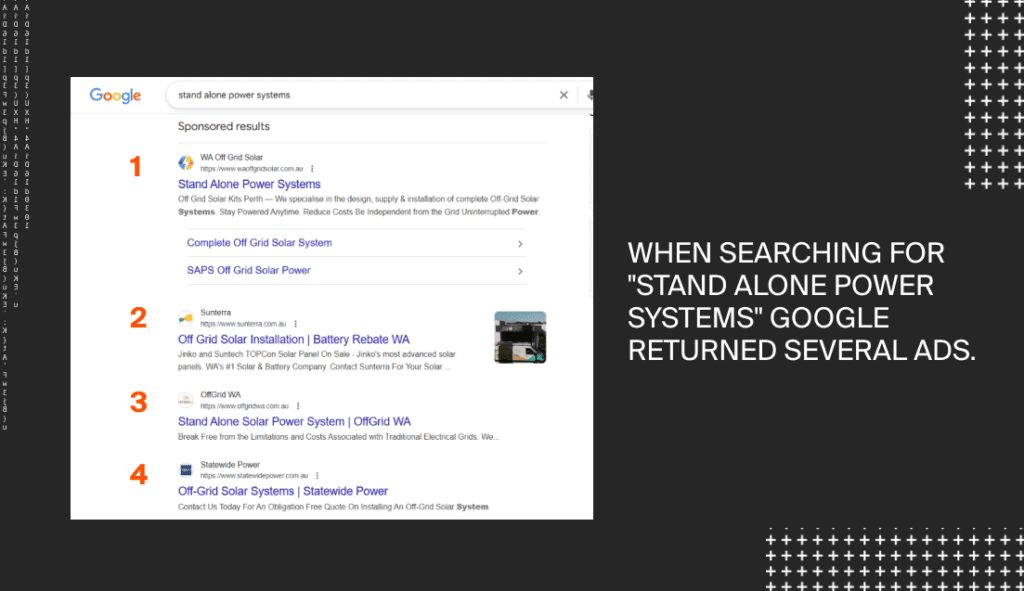
As a result, bids are inflated. Previously, a click could cost literally a few cents. Today, in some niches, the price reaches tens of dollars. This is especially noticeable in real estate, medical services, and the B2B segment, where a single client can generate thousands or even tens of thousands of dollars for a company.
Subject Matters
There are niches where the cost per click is traditionally high. Lawyers, banks, dentists, fitness studios, and beauty services are all overheated because demand is high and competition is intense.
Sometimes, high costs are due not only to competition but also to limitations of advertising platforms. For example, advertising for medical and cosmetology services on Google Ads often requires approval and undergoes additional checks, which impacts the cost per impression.
Sometimes, entrepreneurs don’t even notice they’re falling into an “unprofitable category.” For example, you sell board games, but the system mistakenly classifies them as gambling-related queries, causing your cost per click to skyrocket. Therefore, it’s important to check which category your ads fall into.
How relevant is your advertising?
Consider this: someone searches for “buy a bicycle,” clicks your ad, and ends up on the store’s main page, where bicycles aren’t even highlighted. What will they do? Close the tab, of course.
For Google Ads, this is a signal that the ad was irrelevant. This means the cost per click should increase, because the platform wants to show users the most relevant answers.
Hence, the key takeaway: the landing page should be relevant to the search query. Don’t drive traffic to the main page. Create separate landing pages, or at least use relevant product or service categories.
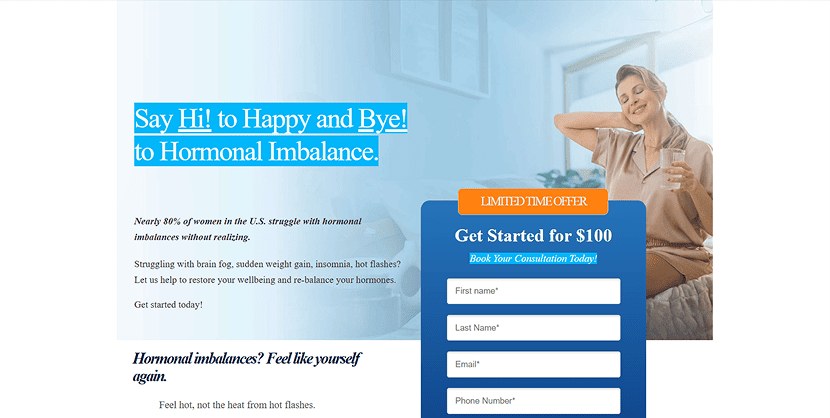
For example, for our client, a wellness clinic, we specifically created a separate landing page to promote promotions on cosmetology services.
Who is your audience?
The cost per click also depends on who the ad is shown to.
Students often click on ads for expensive equipment or luxury brands, but rarely make purchases. Business owners and decision makers, on the other hand, click less frequently but are much more likely to become customers.
Many beginning marketers make the mistake of excluding audiences with higher CPCs and leaving only “cheap clicks.” As a result, the funnel breaks down: there’s a lot of traffic, but no sales.
The correct approach is to look not at the cost per click, but at the revenue the audience ultimately generates.
Geography and time
Sometimes, the cost per click depends not only on the topic or audience, but also on geography. In less competitive states and cities, advertising is cheaper. In New York, Los Angeles, and other major markets, it’s more expensive.
The same applies to time. During peak hours (for example, weekday evenings), clicks are more expensive because competition is higher. Advertising is cheaper at night or early in the morning. For B2B companies, weekends are often less effective, but for restaurants or entertainment businesses, they generate the most leads.
Words decide a lot
Keyword selection is a science unto itself. All phrases can be segmented into categories:
Commercial (transactional queries). Phrases with “buy,” “order,” “price,” and “for sale” bring in hot leads, but are more expensive. This is the most competitive audience in Google Ads.
Problem-aware queries are situations where a person isn’t yet ready to buy, but has already encountered a problem and is looking for a solution. For example: “why does my phone battery drain fast?” or “how to reduce noise from windows.”
These queries are cheaper because the competition is lower. But they are valuable because you catch the customer early in the process of developing a need.
Informational queries are when a person is simply researching a topic or looking for ideas: “best summer vacation ideas with kids,” “things to do near me on weekends.”
This is a “cold” audience. Conversion is lower, but the CPC is usually minimal.
However, a high search volume doesn’t always mean a high click rate. Competition is everything. Sometimes rare, long-tail keywords are more expensive when large companies compete for them.
This is why working with negative keywords is so important.
CTR and ad extensions
CTR is the percentage of people who clicked on an ad. The higher the CTR, the lower the cost per click. Google Ads rewards ads that receive more clicks.
CTR increases when an ad best matches user expectations. People click on something that immediately promises a solution: not “home renovation services,” but “Complete home renovation in 30 days with fixed pricing.”
It’s important to include specifics: timeframes, guarantees, figures, and social proof.
Ad extensions, such as sitelinks, call extensions, promotions, and structured snippets, also increase CTR. They make the ad more visible and increase click-through rates.
Algorithms don't like stops
When you launch a campaign, Google Ads goes through a learning phase. Initially, the CPC is higher, then the algorithm optimizes impressions.
If you constantly stop and restart the campaign, the learning phase resets.
As a result, you end up overpaying for clicks every time.
What is cost per click in simple terms?
At first glance, it seems that the cheaper the click, the better. But in reality, it’s the opposite.
A cheap click can mean:
• an irrelevant audience
• low-quality traffic
• no sales
But an expensive click can bring in a customer who will generate tens of times more profit.
The main goal of a business is not the minimum CPC, but the maximum ROI.
Conclusion
The cost per click isn’t a problem, but rather an indicator of how your advertising is performing under current conditions.
It’s influenced by competition, subject matter, audience, geography, timing, and the quality of your ads.
The main mistake beginners make is trying to lower their CPC at any cost. It’s far more important to understand how much money each client brings in.
Instead of competing for cheap clicks, businesses should build a system that consistently brings in customers and generates profit. Then, CPC ceases to be a “scary number” and becomes simply a growth metric.
Schedule free marketing consultation
Learn how to stop wasting ad spend and turn marketing into real profit