Many business owners come to us with the question: “How much will advertising cost?” This is a natural and important question because, after all, we specialize in advertising and help businesses attract customers. However, before launching campaigns and investing a budget, we always check whether the business is actually ready to handle a flow of leads.
Advertising is a customer acquisition tool, but its effectiveness directly depends on what is happening inside the business. If the website does not communicate value or encourage users to take action, even high-quality traffic will not generate leads. If sales managers cannot process incoming inquiries quickly enough, customers will go to competitors. If the business economics have not been calculated, the cost per lead may end up being higher than what the company can afford.
Take this checklist and review your business right now based on each point. You will identify weak areas that prevent your advertising from generating a positive return and understand what needs to be fixed before launching campaigns.
Step 1. Do You Know Your Customers and Competitors?
Many business owners launch advertising based on their own assumptions about the market: “I know my audience, I’ve been in this business for years.” But personal experience and real data are two different things. Without a deep understanding of your target audience and competitive landscape, you will be making decisions blindly.
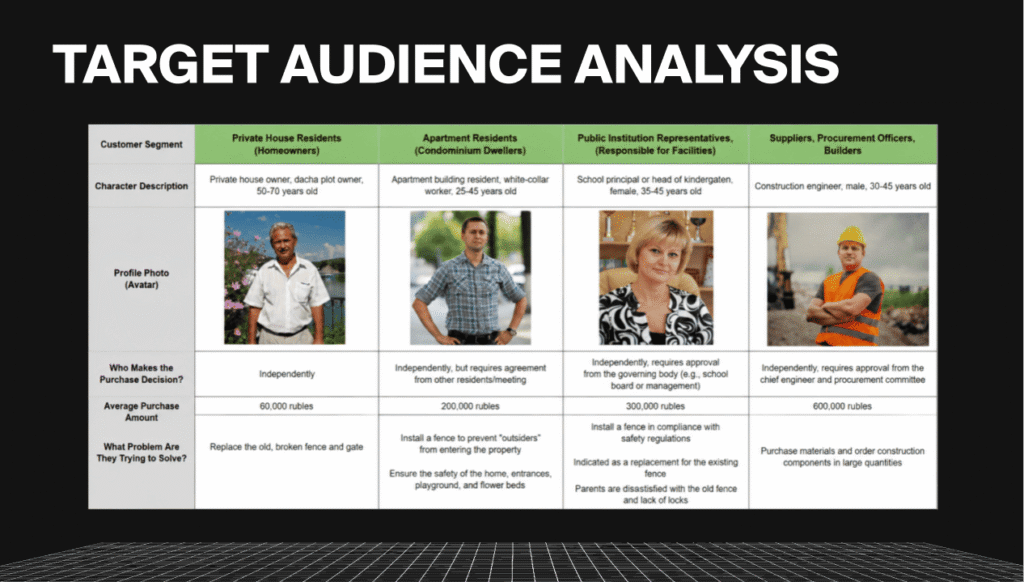
Target Audience Analysis
The first and most important step is understanding who you are serving. Without a clear customer profile, any advertising campaign becomes guesswork: you do not know who to target, what messaging to use, or what customer pain points to address.
What you need to understand about your customer:
Demographics: age, gender, income level, marital status, education.
Geography: where they live and work, and whether there are regional specifics.
Problems and pain points: what challenges they face, what frustrates them, and what prevents them from achieving their goals.
Needs and desires: what they want to achieve and what outcome matters most to them.
Purchase motivation: why they decide to buy your product instead of abandoning the idea.
Objections: what stops them from making a purchase, and what fears or doubts they have before buying.
Information channels: where they search for solutions to their problems.
You can collect this information through surveys of existing customers, analyzing reviews and comments, talking with sales managers, and researching industry forums and social media groups. The deeper you understand your customers, the more accurately you can configure your advertising campaigns — and the higher your conversion rate will be.
Customer Journey Map (CJM)
Knowing who your customer is is not enough. It is also important to understand how they make a purchase decision: from the first moment they recognize a problem to the point where they become your customer. This is called a Customer Journey Map (CJM).
A customer journey map helps you understand where customers interact with your business, what they feel at each stage, and what questions they have. This allows you to optimize both your advertising and website so they support customers throughout the entire journey and help them choose your company.
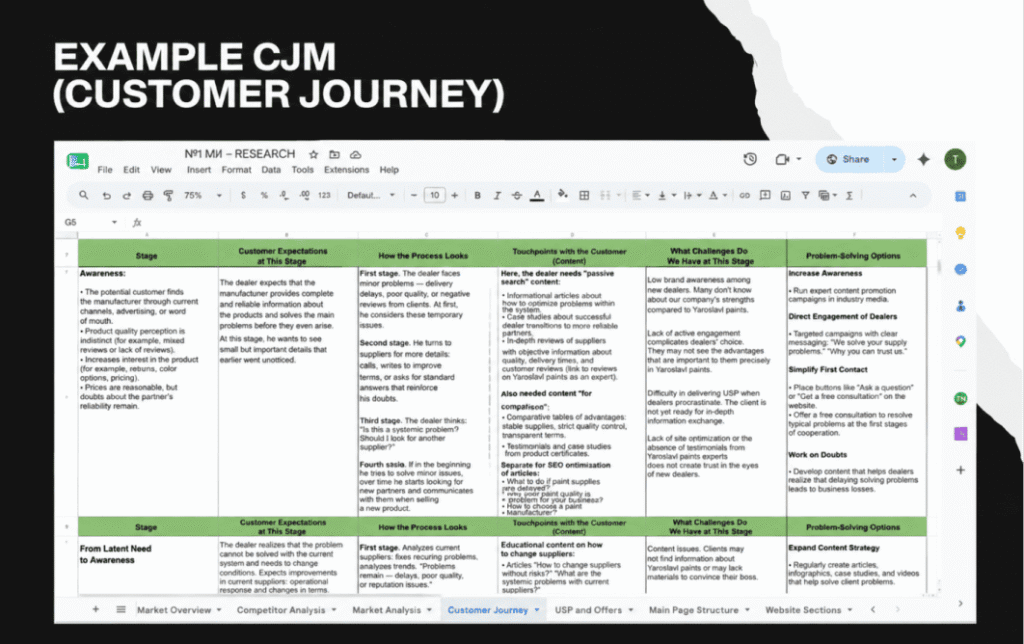
Break the customer journey into stages and describe each one:
Stage 1. Problem Awareness
The customer realizes they have a problem or need. They start searching for information, asking people they know, and formulating their request.
Stage 2. Information Search
The customer explores possible solutions: they search on Google, read articles, review company offers, look at testimonials, and analyze examples of previous work.
Stage 3. Comparison and Selection
The customer chooses between several companies. They compare prices, terms, guarantees, and ask additional questions.
Stage 4. Decision and Purchase
The customer makes a choice, completes payment, or signs a contract.
Stage 5. After Purchase
The customer begins using the product or service. At this stage, they either remain satisfied and recommend your business, or become disappointed and leave.
For each stage, it is important to understand:
• What does the customer see at this moment (your ads, website, social media, reviews)?
• What do they feel and think?
• What questions and objections do they have?
• What prevents them from moving to the next stage?
• What can you do to help them move forward?
A customer journey map is the foundation for building effective advertising campaigns and improving your website. When you understand what customers are thinking at each stage, you can create the right advertising messages and content that help them make a decision.
Competitor Analysis
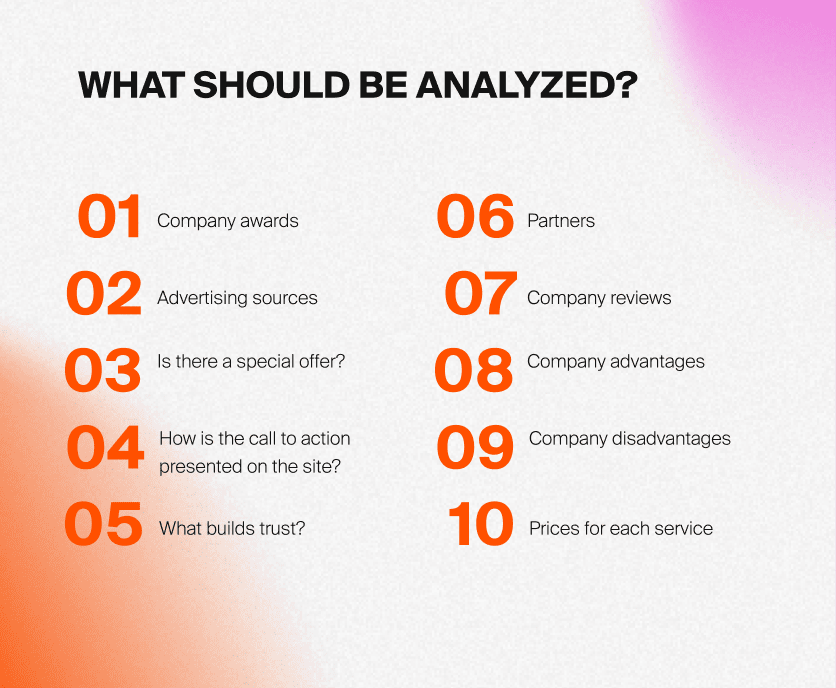
Once you understand who your customer is and how they make purchasing decisions, the next step is to analyze who is already competing for their attention. Competitor analysis is not about copying other companies’ strategies — it is about finding your own advantages and identifying opportunities for growth.
How to collect information about competitors:
- Study their websites and landing pages.
- Subscribe to their social media accounts and newsletters.
- Analyze their advertising campaigns using specialized tools.
- Read customer reviews about them on Google Maps, industry forums, and review platforms.
- Contact them as a potential customer or submit an inquiry to understand how their sales team communicates and handles leads.
Step 2. Is There Actually Demand?
Many business owners are confident that their product is definitely needed by customers, but marketing is not built on assumptions — it is built on data. Before launching advertising, it is important to understand how many people are searching for your products or services, how they phrase their searches, how competitive the market is, whether there is seasonality, and how many leads you can realistically generate.
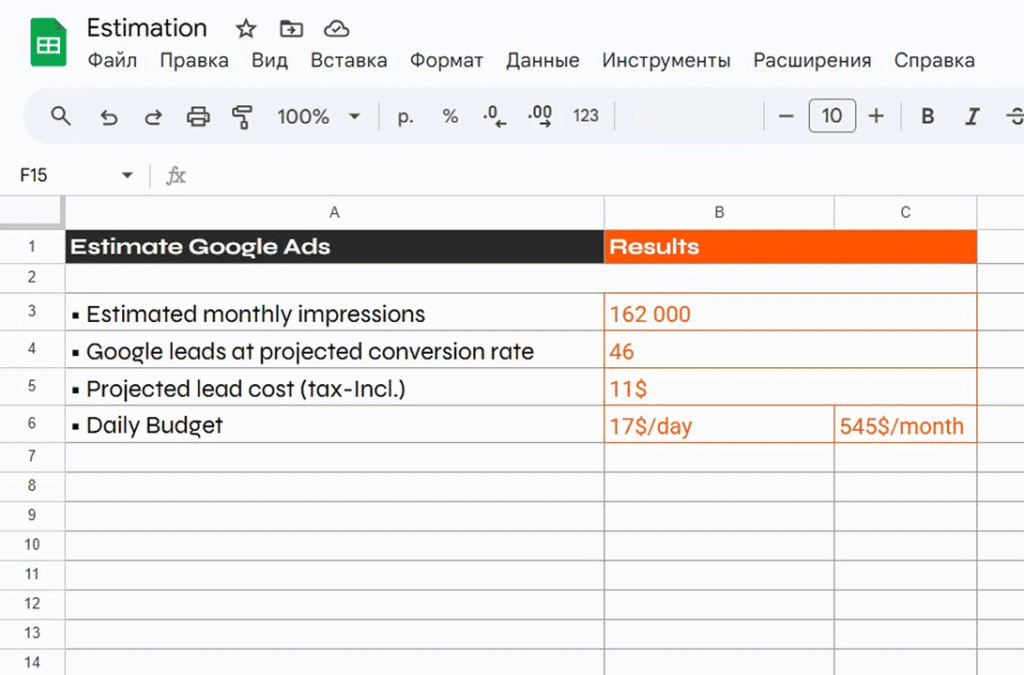
To do this, you only need to use several tools. This is the stage where a media plan is created, allowing you to estimate potential traffic volume, approximate cost per lead, recommended advertising budget, and the possible number of inquiries in advance. Without this data, you are launching advertising blindly and putting your budget at risk from day one.
As part of our forecast (media plan), we always analyze whether there is actual demand for your product or service.
A media plan for PPC advertising is the process of collecting preliminary data and forecasting expected results based on market analysis. Before launching campaigns, you already understand the estimated traffic volume, advertising budget, number of leads, average cost per lead, and expected performance — usually with an accuracy margin of around 10–15%.
Why does forecasting matter for a business?
The ability to invest your budget where there is real sales potential. Creating a realistic sales plan.
Choosing the right direction for growth. For entrepreneurs who operate multiple businesses, forecasting helps identify which direction has the strongest potential for promotion.
If you also want to understand how profitable PPC advertising can be for your business, we can prepare a free forecast for you.
Step 3. Have You Calculated Your Business Economics?
One of the most common mistakes business owners make is focusing on getting the cheapest possible lead. They compare lead costs from different agencies, choose the provider promising $5 per inquiry instead of $10, and believe they have saved money. But the truth is that the lead itself is not what matters. Profit is what matters.
A cheap lead may turn out to be low-quality and never convert into a sale. An expensive lead can generate significant profit if it comes from a customer with strong purchasing power and high margins. That is why, before launching advertising, you need to calculate your business economics and clearly understand how much you can afford to spend acquiring one customer while still remaining profitable.
To do this, you need to know five key metrics:
• Average order value
• Profit margin
• Repeat purchases
• Profit per customer
• Maximum Customer Acquisition Cost (CAC)
When you know your maximum customer acquisition cost, you stop chasing cheap leads and start making decisions based on profitability rather than emotions. This is the only way to avoid wasting your advertising budget.
Step 4. Is Your Website Ready to Sell?
You can bring thousands of potential customers to your website. You can create perfect targeting, select highly relevant keywords, invest your advertising budget, and generate a stream of qualified visitors. But if your website does not build trust, answer customer questions, or help people make a decision, your advertising budget will be wasted.
People will visit, look around, and leave. No inquiries. Money spent.
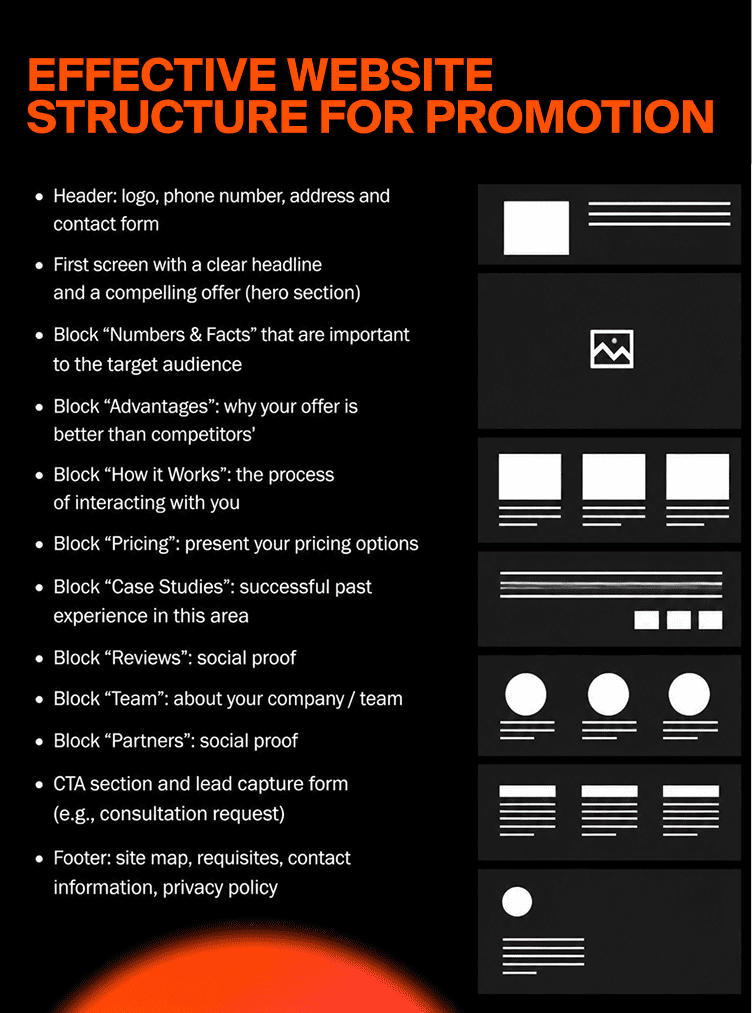
If at least half of these elements are missing, it is too early to launch advertising. You will be paying for traffic that your website cannot convert into leads. First, improve your website: remove doubts, build trust, make the customer journey clear, and simplify the decision-making process.
By the way, we always analyze our clients’ websites before launching advertising campaigns. If we identify weak points, we are transparent about them and recommend specific improvements — from editing website copy and restructuring pages to completely redesigning landing pages.
We are interested in making sure that every dollar you invest in advertising generates profit, which is why we always recommend getting your website ready first. Only then should you launch advertising campaigns.
Step 5. Is Your Sales Team Ready?
This is one of the most expensive mistakes in digital marketing. Even perfectly optimized advertising campaigns, precise targeting, and a well-developed strategy will not save the situation if incoming leads are not handled properly.
You can generate hundreds of highly interested leads, but if a sales manager answers the phone only occasionally, responds three hours later, or does not know how to communicate effectively with potential customers, those customers will go to competitors. And advertising will get the blame.
Before launching advertising campaigns, review your sales team based on these questions:
• How quickly does a manager respond to an incoming call?
• Are all calls recorded and analyzed?
• Do you have a communication script that helps managers guide conversations and handle objections?
• Do you use a CRM system to track leads and monitor sales performance?
• Do you measure the conversion rate from inquiry to sale and analyze the reasons why potential customers do not buy?
Imagine a real situation. Advertising brings in ten potential customers who are interested and ready to buy. The sales manager calls back only three hours later. During that time, five people have already purchased from competitors, and three others have changed their minds.
In the end, only two deals are closed.
The business owner looks at the result and concludes: “The advertising doesn’t work. The agency failed.”
But the real problem was not the advertising — it was that the sales team was not prepared to handle the flow of new customers.
Conclusion
Digital marketing begins long before you create an advertising account or launch campaigns.
Success comes from a systematic approach to business, where all key elements are properly prepared: your website, sales team, business economics, understanding of your audience, and competitive environment.
Advertising brings customers, but internal business processes turn those customers into revenue. If any part of the system works poorly, your advertising budget will be spent inefficiently.
80% of companies lose their marketing budget not because their advertising campaigns are poorly configured, but because the business itself was not ready for an influx of customers.
The website did not convert visitors. Sales managers did not process inquiries effectively. Business economics were not calculated. The target audience was only partially understood.
As a result, advertising delivered less than its potential, and business owners became disappointed with the marketing channel — even though the real problem was somewhere else.
Before launching advertising and paying for traffic, honestly answer five questions:
Do I know my customers and competitors?
Is there demand for my product or service?
Have I calculated my business economics?
Is my website ready to convert visitors into customers?
Is my sales team ready to handle incoming leads?
If the answer to any of these questions is “no” or “I’m not sure,” fix the weak point first.
In this case, every dollar invested in advertising will work toward generating profit instead of being wasted.
If you need help preparing for a campaign launch or want a free PPC forecast, we are always ready to help you create advertising campaigns that actually generate a return.
Schedule free marketing consultation
Learn how to stop wasting ad spend and turn marketing into real profit