Most business owners think simply and logically: if there are leads, there should be sales. But in reality, between the moment a customer leaves their phone number and the moment the money hits your bank account lies a massive chain of processes that the business owner often doesn’t even think about.
And here is what’s interesting: when sales drop, the sales department is always the first to take the hit. The manager looks at reports, sees plenty of leads but very little money, and thinks: “The managers aren’t working, I need to change the team.” Or conversely, they turn off advertising because “it doesn’t pay off.” But the truth is that in nine out of ten cases, the problem lies much earlier: at the ad setup stage, in analytics, on the website, or in how leads get into the system in the first place.
So before firing your sales team or cutting your ad budget, let’s calmly break down exactly where your funnel is breaking and find those exact holes. In this article, we will go over all the main reasons.
What Kind of Leads Are Actually Coming In
When seeing leads but no sales, most business owners run to the sales department first. But the truth is that not all leads are created equal.
• People who genuinely want to buy. They have the budget, timeline, and understanding of their problem. They leave a request because they need a solution right now.
• Those who are just comparing prices. They have already chosen the product, but are shopping around companies to see where it’s cheaper. They will buy from a competitor if you don’t show your value.
• Those who don’t fit the budget. They like your product, but they can’t afford it. They ask for discounts, haggle, but ultimately still leave for whoever is cheaper.
• Accidental inquiries. Someone clicked on the ad by mistake, was testing the form, or it’s spam. They never intended to buy.
• Leads left “just in case.” The person simply wanted to get information or a price list to save for later and forget about. They aren’t ready to buy right now.
If an ad generates 100 leads, it doesn’t mean the business received 100 potential customers. Often, only 10–20 of them can actually become buyers. And the problem isn’t the sales managers, but the fact that the advertising brought in the wrong people.
Don't Rush to Divide Leads into "Bad" and "Good"
It is important to understand that customer behavior depends not only on ad quality, but also on who exactly came in and what stage of the decision-making process they are at.
For example, if you work in a large B2B, almost every client will request multiple commercial proposals. This doesn’t mean your leads are low quality: in many companies, comparing multiple vendors is a mandatory part of the procurement process.
In other niches, a potential client might just be starting to study the market. They leave requests with several companies at once to figure out their options, compare conditions, and understand what solutions exist overall. At this stage, the absence of an instant purchase is normal behavior, not an advertising error.
There are also those who are genuinely not ready to buy today. They leave a request to get a price list, consultation, or presentation, and return to the selection question weeks or even months later. If such a lead doesn’t enter a follow-up communication system, the business simply loses a potential sale.
Therefore, it is important not only to count the number of leads, but also to analyze them by segments:
• Who makes the decision: the owner, marketer, buyer, or technical specialist;
• What stage the client is at: just exploring the market, comparing vendors, or ready to buy;
• Which reasons for refusal are typical for each segment;
• How much time usually passes from the first lead to the deal.
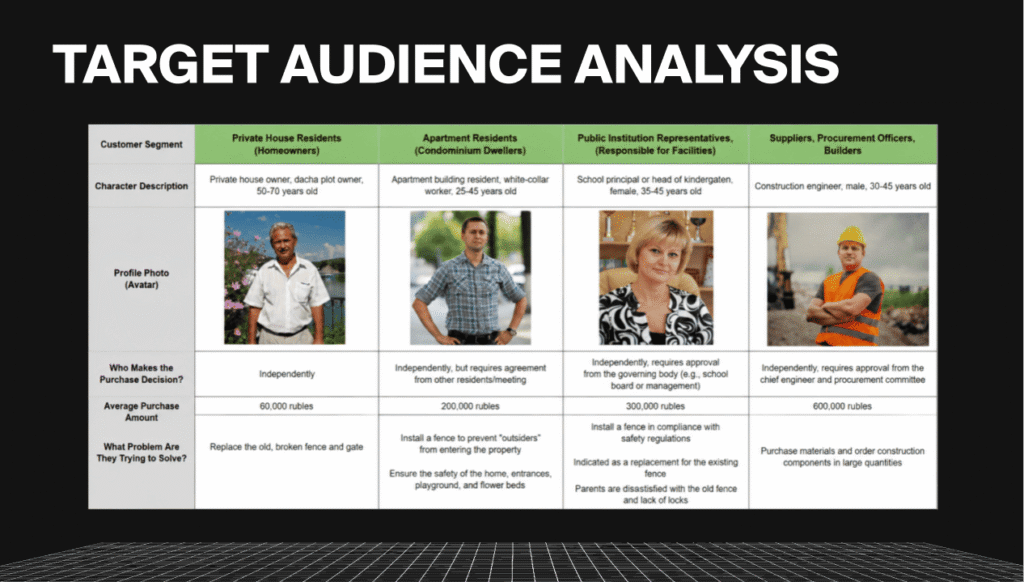
Such an analysis helps you understand which leads are truly non-prospects and which ones simply require a different scenario of engagement.
• Clients who are at the comparison stage can be nurtured with case studies, reviews, and demonstrations of advantages;
• Those not yet ready to buy can be brought back using newsletters, useful content, retargeting, or personal offers;
• For large companies, you should prepare materials in advance that help pass internal approvals: ROI calculations, presentations, commercial proposals, and answers to standard questions.
Which Channels Leads Are Coming From
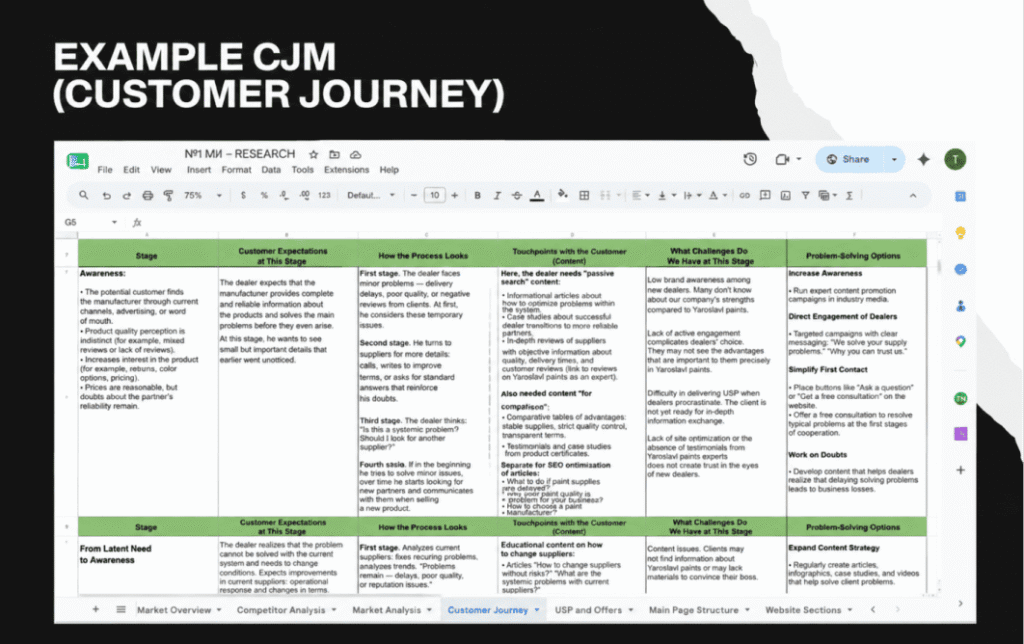
Log into your CRM (for example, HubSpot or Pipedrive). Open the list of leads or deals for the desired period.
Check if the source is specified for each lead:
• Google Ads;
• SEO;
• Targeted social ads;
• Google Maps / Local SEO;
• Email marketing;
• Direct traffic;
• Referrals;
• Social media.
If the source for most leads is listed as “website,” “unknown,” or “other,” it means you don’t understand which channels are actually bringing in customers. In that case, you need to set up UTM parameters, connect website forms to your CRM, and pass the lead source into the lead card.
Count how many leads out of the total can be considered targeted vs. non-targeted. For example, there were 60 leads:
• Targeted: 24
• Non-targeted: 36
This means the problem is not the quantity of leads, but their quality.
What to Do If You Have Many Non-Targeted Leads
When you see that 40–60% of leads are random people who lack the budget, geographic location, need, or decision-making authority, act as follows:
- Review keywords. For example, if you sell high-end custom kitchens, remove the generic query “kitchens” and keep “custom luxury kitchen installation.”
- Add negative keywords. For example, add “free,” “DIY,” “download” to negative keywords, as these people will never buy.
- Remove overly broad queries. For example, replace the query “renovation” with “turnkey apartment renovation in New York.”
- Clarify the offer in the ad. For example, instead of “Affordable Renovation,” write “High-Quality Renovation with a 5-Year Warranty.”
- Add prices or conditions to the website. For example, write “Renovation cost starting at $50/sq. ft.” — people will immediately understand if it fits them or not.
- Separate landing pages for different services. For example, create a separate page for full apartment renovations and a separate one for cosmetic touch-ups, so the client lands precisely on the service they were searching for.
In the “Island Machinery” case study, separate landing pages were prepared for each equipment line featuring popular models, technical specifications, and benefits. This made the offer more aligned with the user’s search query and boosted conversions.
However, the problem can be prevented even before launching ads
Non-targeted leads only become noticeable after the ad budget has already been spent. The root cause often appears much earlier: before launch, nobody answered a few key questions:
- Is there sufficient demand in the first place?
- Which audience segments will search for the product?
- Which search queries will bring customers, and which will bring people who are just comparing prices?
- How many target inquiries can potentially be generated?
- At what cost per lead will advertising remain profitable?
If there are no answers to these questions, the company launches ads virtually blind. As a result, there are leads, but their quality turns out to be significantly lower than expected. But a logical question arises: how can you calculate the result in advance?
A media plan in search advertising is the preliminary collection of data and planning of results based on conducted analysis. You know in advance the volume of traffic, advertising budget, number of leads, and average cost per lead — all with an error margin of only 10–15%.
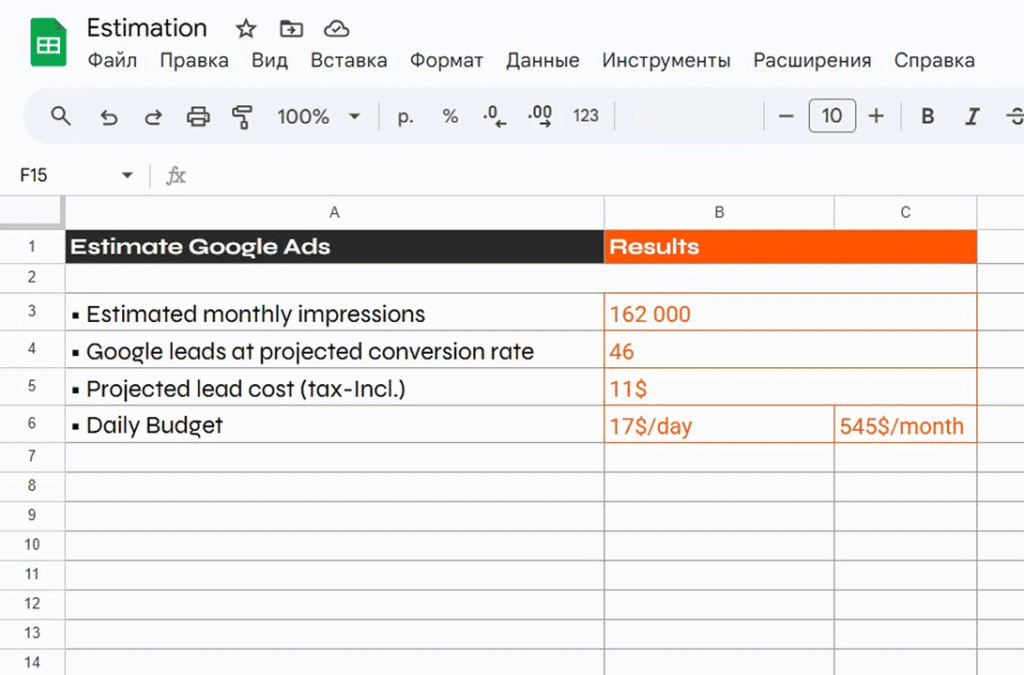
Why does a business need forecasting?
• Ability to spend budget where sales can actually be made.
• Calculation of a realistic sales plan.
• Choice of growth direction (for entrepreneurs with multiple businesses, it offers a way to pick the most effective one to promote).
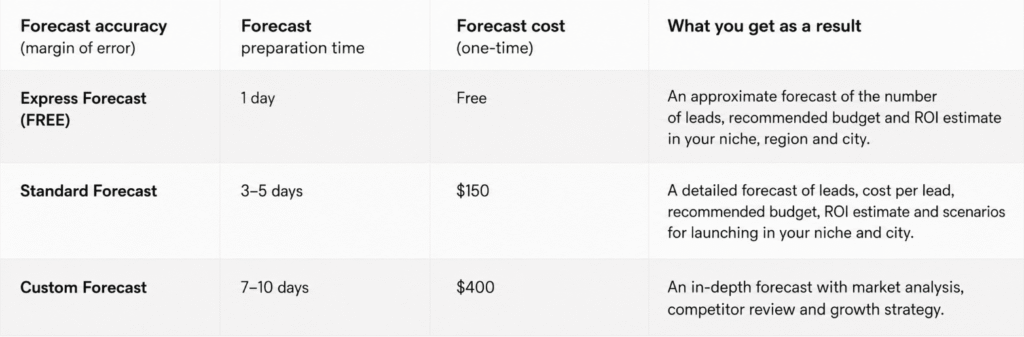
If you also want to know how profitable search advertising will be for your business, we will create a forecast for you for free.
Does the Ad Match What the Person Sees on the Website?
A frequent cause of poor sales is a mismatch: a person clicks on one promise, but sees another on the website. For example, the ad says “Price calculation in 15 minutes,” but the website just has a generic “Leave a request” form. Or the ad mentions a promotion, but there is no promotion on the page. The client feels deceived and leaves for someone who tells the truth from the start.
How to check
Step 1. List 5–10 active ads
Take the ads that generate the most leads. For each, write down the headline, text, offer, price/discount/timeline, and destination link.
Step 2. Open the page where the ad leads
Check if the page has the exact same offer, whether the service, region, timeline, and promotion match. Most importantly — is it clear to the client what to do next?
Step 3. Check what the sales manager knows
Call or ask your manager: do they know what promotion is running in the ad, what price they are quoting, and what they say after a lead comes in? Does it match the website and the ad?
What to do if there is a mismatch
• Update the ad copy so it honestly reflects reality.
• Update the landing page: add relevant prices, promotions, and conditions. Remove promises the business cannot deliver on.
• Pass current offers to sales managers, hold a brief meeting, and make sure everyone knows what is currently advertised.
• Create a dedicated page for a specific promotion or service — this way, the client gets exactly what they were promised.
Landing Page: Is It Helping to Get Leads or Getting in the Way?
Advertising can bring in the right person: warm, with money, and with a need. But the website might fail to bring them to the point of leaving a request. Especially if the page is confusing, slow, or fails to answer the client’s main questions: “Is this right for me?” and “What should I do next?” The client won’t waste time figuring it out. They will simply close the tab and leave for competitors whose offer is clear from the very first screen.

How to check on your own
Most traffic comes from mobile devices. You need to check not just on a computer. Check whether the page loads quickly, if the main headline is visible without scrolling, if the text is easy to read, if the call-to-action button is visible, if the form is easy to fill out, if blocks don’t get misaligned, and if the phone number is clickable. If everything on mobile is tiny and uncomfortable, the client will leave.
On the first screen, it must be clear what you offer, who it is for, in which region, why someone should choose you, and what to do next. Bad example: “Individual approach and high quality” — means nothing. Good example: “We deliver pizza in 30 minutes or it’s free” — concrete, clear, and to the point.
Then, walk through the customer journey in real-time. Fill out the form, click the button, check if a thank-you message appears on screen, if an email or CRM notification arrives, and if the goal fired in analytics. If something broke, you lost a customer without even knowing it.
Don’t forget analytics. Use Google Analytics 4, Hotjar, or Microsoft Clarity — they offer session recordings, heatmaps, and event tracking that will show where clients stumble, where they stop, what they click, and on which block they leave.
What to do if the page is weak
Rewrite the first screen; make the headline specific rather than generic. Add a clear Unique Selling Proposition (USP) that sets you apart from competitors. Shorten the form: the fewer fields, the more conversions. Add reviews and case studies so clients see that you don’t just make promises, but actually deliver results. Add prices or at least price ranges so people can immediately understand if it fits their budget. Speed up website loading, as every extra second drops conversion. And optimize the mobile version so it is just as convenient on a phone as it is on a computer.
Why Good Leads Don't Become Customers
Suppose you audited your leads, reconfigured advertising, and started receiving inquiries from people who can genuinely buy. Yet sales still aren’t growing. This means the problem lies inside the company: at the stage of processing leads and working with customers. Here are the most common reasons why good leads die without turning into revenue:
Slow response time
A customer submitted a request; they are hot and ready to buy. But the manager calls back in an hour, two hours, or three. The customer has already cooled off, called competitors, and picked whoever responded faster. Speed of the first response is the cheapest way to increase sales without investing in ads.
Leads go unprocessed
A portion of leads simply gets lost. A website form breaks, emails land in spam, messenger notifications go unread, managers forget to call back. Up to 15% of leads can simply fail to reach a manager. You pay for advertising, bring in clients, and they vanish into a black hole between the website and the CRM.
Lack of qualification
The manager doesn’t verify who is in front of them. They don’t ask about needs, budget, or timelines. They immediately quote a price or list services. The client leaves because they didn’t understand what is being offered or why it fits them. Without qualification, a manager tries to sell the exact same way to everyone, whereas clients want their specific situation to be addressed.
Weak sales scripts
The manager has no clear conversation structure. They improvise, forget to ask about important details, and skip sales stages. The client senses uncertainty and loses trust. A script is a structure that helps the manager guide the client from “hello” to payment processing.
Failure to handle objections
The client says “it’s expensive,” “I’ll think about it,” or “I need to consult with my spouse.” The manager gives up: “Alright, take your time thinking,” or “Call back if you decide.” They don’t realize that an objection is not a rejection — it’s a hidden question. The client wants the value explained, doubts resolved, and benefits demonstrated. Instead, the manager simply lets them walk away.
No follow-ups
The manager spoke with the client, the client said “I’ll think about it,” the manager hung up and forgot. The client forgot too. The deal died. Without a system of follow-ups (calls, emails, reminders), you lose clients who simply weren’t ready on the first contact.
Lack of quality control
The manager doesn’t listen to call recordings, analyze mistakes, or provide feedback. Sales reps work as best as they know how, repeat the same errors, and nobody corrects them. Without quality control, sales don’t grow — they stall or decline.
Marketing and sales don’t share data
The marketer launches promotions and promises one thing in ads, while sales managers are unaware or cannot confirm it. The client comes for the advertised promise, but the manager says something else. Trust drops. Or vice versa: the marketer doesn’t know which objections kill deals most often and continues driving the same traffic. Without data exchange, marketing and sales live parallel lives.
Conversion rates are not analyzed stage by stage
You don’t know how many leads reached a manager, how many turned into conversations, how many into proposals, and how many into payments. You only see the overall figure: “there are leads, but no sales.” But if you don’t know where exactly customers are lost, you cannot fix it. Analyzing every stage of the funnel shows where the leak happens and where to direct your efforts.
Most traffic comes from mobile devices. You need to check not just on a computer. Check whether the page loads quickly, if the main headline is visible without scrolling, if the text is easy to read, if the call-to-action button is visible, if the form is easy to fill out, if blocks don’t get misaligned, and if the phone number is clickable. If everything on mobile is tiny and uncomfortable, the client will leave.
On the first screen, it must be clear what you offer, who it is for, in which region, why someone should choose you, and what to do next. Bad example: “Individual approach and high quality” — means nothing. Good example: “We deliver pizza in 30 minutes or it’s free” — concrete, clear, and to the point.
Then, walk through the customer journey in real-time. Fill out the form, click the button, check if a thank-you message appears on screen, if an email or CRM notification arrives, and if the goal fired in analytics. If something broke, you lost a customer without even knowing it.
Don’t forget analytics. Use Google Analytics 4, Hotjar, or Microsoft Clarity — they offer session recordings, heatmaps, and event tracking that will show where clients stumble, where they stop, what they click, and on which block they leave.
What to do if the page is weak
Rewrite the first screen; make the headline specific rather than generic. Add a clear Unique Selling Proposition (USP) that sets you apart from competitors. Shorten the form: the fewer fields, the more conversions. Add reviews and case studies so clients see that you don’t just make promises, but actually deliver results. Add prices or at least price ranges so people can immediately understand if it fits their budget. Speed up website loading, as every extra second drops conversion. And optimize the mobile version so it is just as convenient on a phone as it is on a computer.
Conclusion
If there are plenty of leads but no sales, don’t rush to blame advertising or the sales department. Most often, the problem is hidden within the funnel itself: lead quality, ad settings, landing page, analytics, or lead handling.
To increase sales, it is important to analyze the entire customer journey: from the first click on an ad to closing the deal. This is the only way to find the exact stage where the business is losing money and make data-driven decisions rather than relying on assumptions.
If you want to understand in advance how effective search advertising will be for your business, request a free ad performance forecast. It will help evaluate the potential volume of leads, their cost, and campaign ROI before launching your ad budget.
Schedule free marketing consultation
Learn how to stop wasting ad spend and turn marketing into real profit