Google Ads can count a form submission, but it may not know whether that inquiry became a real opportunity or a paying customer. Offline conversion tracking helps connect those later outcomes to your advertising. It can give you a clearer picture of which campaigns bring valuable business—and, when the data is reliable, a better signal for campaign optimization.
For an owner, the decision is not simply whether to connect a CRM. First, agree on what a qualified lead means, how your team records it, and which sales outcomes you can track consistently.
Why form submissions do not tell the whole story
Imagine two campaigns each produce 40 inquiries. Campaign A brings 20 people who fit the service and location; campaign B brings eight. If both cost the same, the second campaign looks just as good on a cost-per-form report, even though the cost per qualified inquiry is very different.
These are illustrative numbers, not a forecast. Qualification and eventual sales still depend on how quickly you respond, price, availability, and many other factors.
In one WEB ALTERNATIVE case involving medical training, the business needed more relevant inquiries. The work included reviewing tracking and search terms. The case illustrates why the number of leads alone does not describe their business value; it does not establish that CRM imports were used or caused the outcome.
What is an offline conversion?
An offline conversion is an action that happens after an ad interaction but outside the website—for example, a sales team confirms an inquiry is suitable, a customer attends an appointment, or a contract is signed. Information about that outcome can be sent back to Google Ads and matched to an earlier ad interaction where possible. Google explains this in its guide to offline conversion imports.
A CRM can make these stages easier to record. A business without one may still be able to track outcomes using another reliable process; the appropriate connection depends on its tools and the information available. Some outcomes will not match, so the numbers in Google Ads and your sales records may differ.
Which result should guide your campaigns?
Choose a stage that reflects business value and that your team records consistently. A signed deal is close to revenue, but if you close only a handful of deals and the sale takes months, it may be too infrequent or delayed to guide a campaign effectively. A qualified inquiry may provide a useful earlier signal.
Google describes both qualified leads and converted leads as ways to track later stages. Discuss with your agency which stage is suitable for optimization and which should remain available for reporting. There is no universal answer for every account.
Agree on what “qualified” means
A commercial HVAC company might define a qualified inquiry as a business requesting a service it offers within its service area. A manufacturer might add minimum order requirements or a relevant business application. Record the reason when an inquiry is unsuitable, but do not automatically classify every price comparison or early research conversation as a bad lead.
What to check before making changes
Ask your sales and marketing teams to review the same recent inquiries together. Can they identify the source? Are calls and forms captured? Are lead statuses updated consistently? Can they distinguish an unsuitable inquiry from a suitable prospect who was lost because of timing, price, or follow-up?
Check how data is shared, which permissions and policies apply, and who owns the process. Google offers enhanced conversions for leads to help match later results using permitted customer-provided data. Your team should review the applicable Google requirements and your own privacy obligations before implementation.
If reporting is incomplete, a new connection may make the report look more precise without making the underlying data more reliable. Resolve missing or inconsistent records first, then compare trends over a period appropriate to your sales cycle.
How to judge whether the change helped
Look beyond the number shown in the advertising dashboard. Review ad spend, qualified inquiries, appointments or proposals, and closed customers together. Compare the cost of acquiring a customer with the value that customer can contribute after relevant costs.
A higher cost per inquiry can be worthwhile if more inquiries become profitable customers. Equally, more qualified inquiries do not guarantee higher profit. Seasonal demand, campaign changes, sales follow-up, and small sample sizes can affect comparisons.
For businesses with longer sales cycles, see our guide to measuring Google Ads results when deals take months. For an existing account, our Google Ads management team can discuss how campaign reporting relates to your business goals.
Plan the numbers before increasing your budget
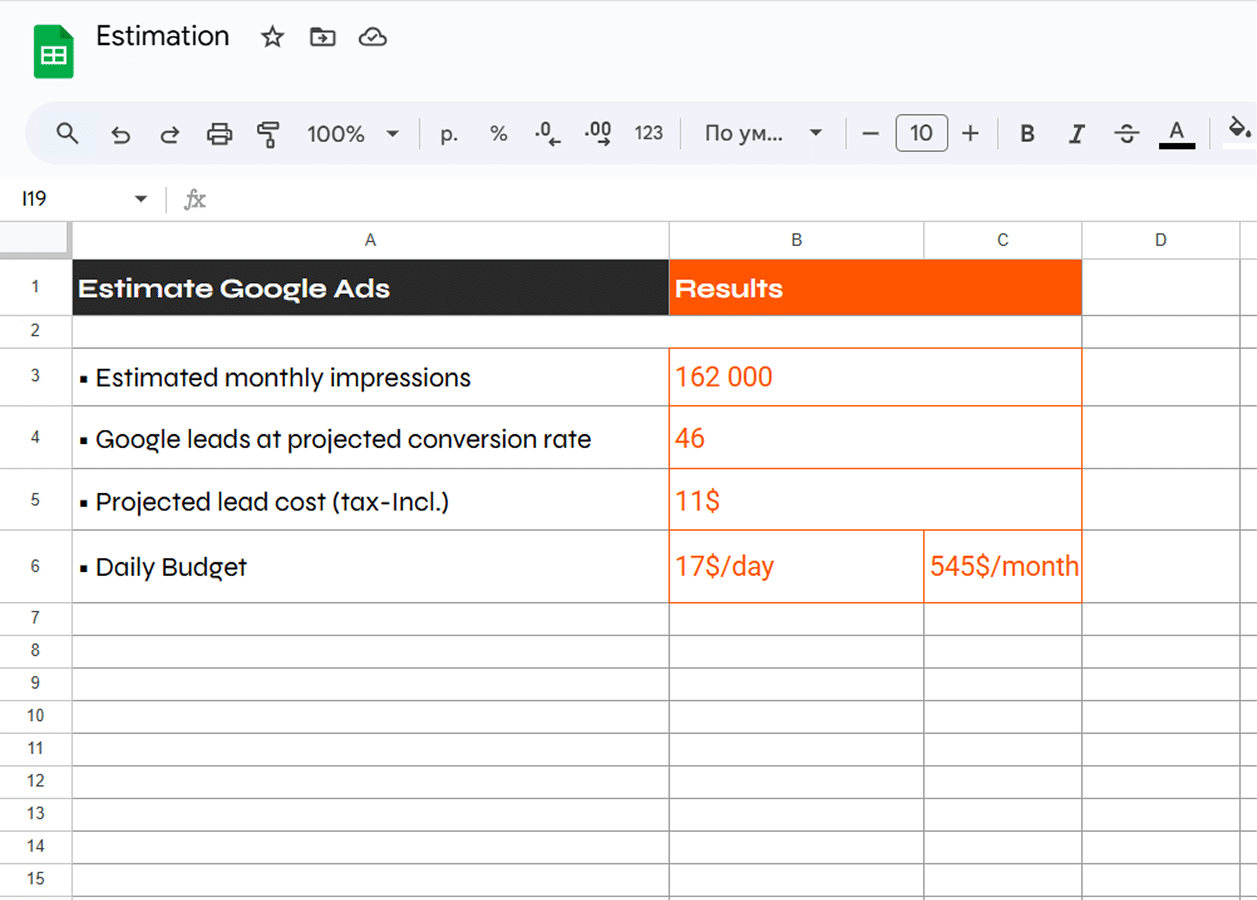
A free Google Ads forecast can help estimate potential demand, advertising budget, inquiries, and cost per lead for your services, location, and goals. It is an estimate, not a guarantee. Compare it with what your business can afford to pay for a customer and what your team can handle.
Frequently asked questions
Does offline conversion tracking automatically improve lead quality?
No. Better feedback can help inform measurement and optimization, but the outcome also depends on campaign settings, your offer, the website, and sales follow-up.
Do I need a CRM to measure sales from Google Ads?
Not necessarily. A CRM is useful when it records lead stages consistently, but a smaller business may use another reliable tracking process. Ask your specialist which method fits your setup.
Should every submitted form count as a qualified lead?
No. A submission shows that someone contacted you. Qualification is a separate business decision based on agreed criteria such as service, location, and fit.
Why might Google Ads and my CRM show different totals?
They can use different attribution rules and reporting dates, and not every sales outcome can be matched to an ad interaction. Delays, missing information, and duplicate records can also affect totals.
How soon can I decide whether the campaign is profitable?
Use a period that accounts for your normal sales cycle and enough reliable data. Recent inquiries may still be open, so review intermediate stages alongside closed sales and avoid drawing firm conclusions from a handful of leads.
Discuss your next step
If your campaigns generate inquiries but you are unsure which ones become customers, WEB ALTERNATIVE can discuss your current reporting and the next practical step. Request a free consultation.