Google Ads can work for a small business when enough potential customers search for its services, the cost of winning a customer fits the business’s finances, and the company can respond to inquiries. It is not a guaranteed source of profit. Before spending, compare the likely cost of a test with the value of a new customer and decide how you will judge the outcome.
A small business does not need the same budget as a national brand to answer that question. It does need a plan suited to its market, service area, capacity, and sales process. Here is how to decide whether a test makes sense.
Start with demand and your offer
Search advertising can put your business in front of people looking for a service you provide. The opportunity depends on how many relevant searches exist in the locations you serve and what those searches mean. Someone seeking a commercial installation may have a different need from someone seeking a low-cost repair.
List the services and locations that matter most. Then ask whether your offer, availability, and prices are clear enough for the right customer to choose you. If demand is very limited, or the business cannot take more work, paying for additional traffic may not be the first priority.
Check the economics before choosing a budget
Start with the contribution from a typical new job: revenue minus the costs that vary with fulfilling it. Consider repeat business only when you have a reasonable basis for estimating it. This contribution needs to cover customer acquisition and the business’s other costs; revenue alone is not profit.
For a simple illustration, suppose a job brings in $1,000 and its direct delivery costs are $600. That leaves $400 before advertising, overhead, and other costs. If one in four qualified inquiries becomes a customer, four qualified inquiries costing $60 each would mean $240 in advertising per customer. That leaves $160 before overhead and any agency fees. These are illustrative assumptions, not benchmarks or a forecast.
Change the close rate or the quality of inquiries and the answer changes quickly. The small business Google Ads budget guide explains how to plan the spend and distinguish Google’s charges from management fees.
Make sure you can handle the inquiries
An ad click is only the beginning. Prospects need to understand what you offer and how to reach you; someone on your team needs to answer calls or follow up on forms. If a business regularly misses calls or takes too long to respond, it may pay for opportunities it never has a fair chance to convert.
Before launch, agree on who responds, when they respond, and how the team records whether an inquiry was a good fit. A simple record of service requested, location, outcome, and sale value can make the results more useful.
Plan a test you can evaluate
Choose a focused service and area that reflect your priorities, then estimate the relevant search demand and costs. Agree on a budget you can afford to test, how long the test may need, and when you will review it. There is no universal budget or timeline: a narrow market and a long sales process need a different plan from a busy local service.
Track meaningful actions such as genuine calls and form submissions, and compare them with actual inquiries. Where possible, follow those inquiries through to qualified opportunities and customers. Small numbers can change the apparent cost substantially, so avoid treating an early result as a reliable long-term average.
Separate inquiries from customers
Clicks show visits, not sales. A reported conversion can also include an irrelevant call or a duplicate submission. Review a sample with the team and discuss what qualifies as a suitable lead. When tracking or quality is uncertain, investigate before increasing spending.
In a medical training campaign, WEB ALTERNATIVE describes correcting inflated conversion tracking and filtering irrelevant searches. The reported lead count fell after the correction while inquiry quality improved. It is an example of why the number in a dashboard needs context, not a prediction for another business.
When it may be better to wait
Consider postponing a campaign if you cannot fund a meaningful test without putting essential operations at risk, you cannot respond to new inquiries, or you do not yet know which services and areas you want to promote. You may also need to improve an unclear landing page or confirm that your advertising is eligible under the applicable Google policies.
If you have already spent money without useful results, review the existing account and sales process before assuming that the channel or the provider is the only problem. A Google Ads audit can help identify what needs closer examination.
Estimate the opportunity for your business
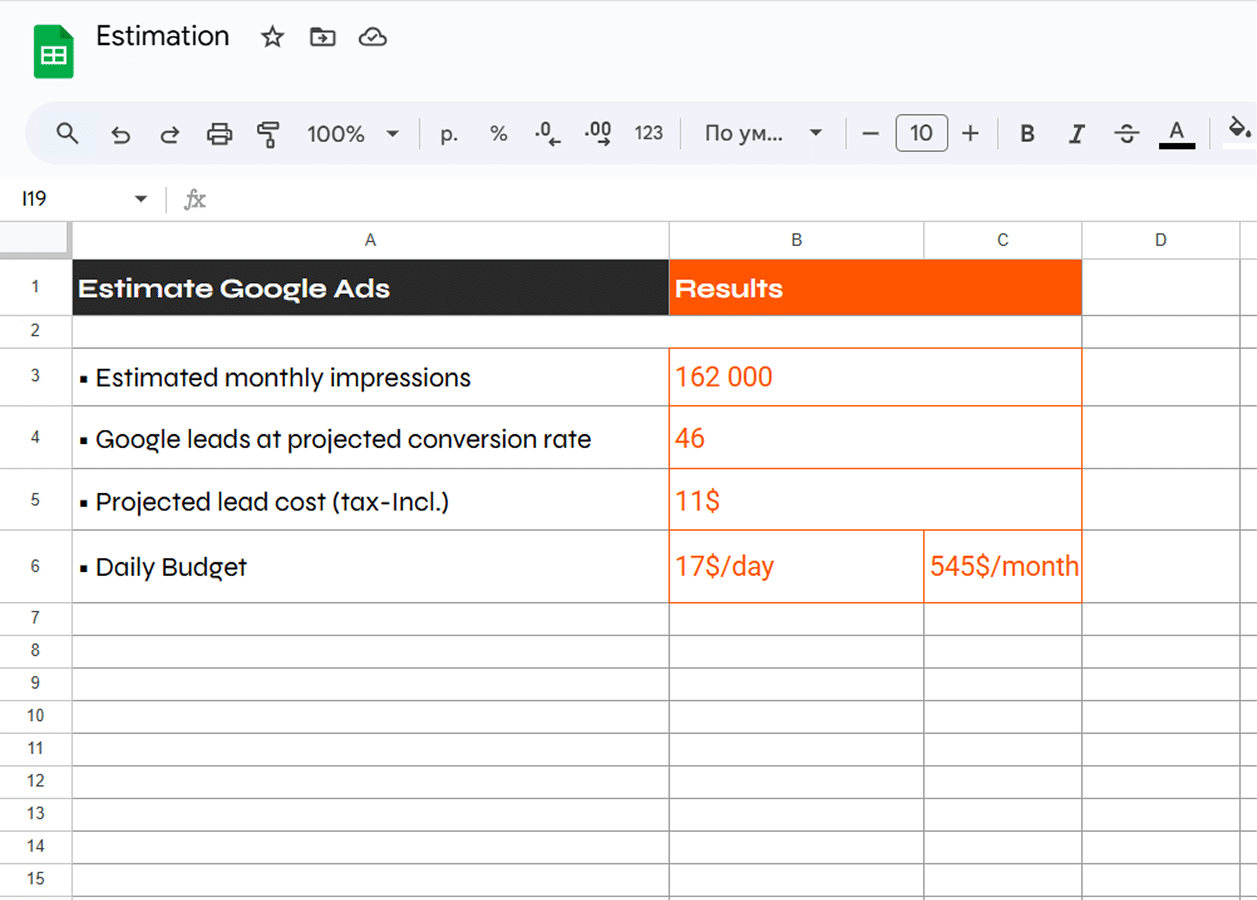
WEB ALTERNATIVE can prepare a free Google Ads forecast based on your services, locations, and goals. It may include estimated traffic, budget, inquiries, and cost per lead. A forecast is an estimate, not a guarantee of leads, sales, or profit.
Frequently asked questions
Can Google Ads work with a small budget?
Sometimes. The useful amount depends on the cost of relevant traffic, demand, geography, and how much data is needed to assess the campaign. Start with an estimate and a focused plan instead of assuming one budget fits every business.
How long does it take to know if Google Ads is working?
There is no fixed answer. The pace of inquiries, the reliability of tracking, and the time customers take to buy all affect the review. Agree on checkpoints before launch and avoid drawing firm conclusions from very few inquiries.
Are clicks or leads enough to measure success?
They are useful early signals, but they do not show profitability by themselves. Compare spending with qualified inquiries and, where possible, customers and the value of their work.
Should I hire an agency or manage Google Ads myself?
It depends on your time, experience, budget, and the complexity of the account. Compare the total cost, responsibilities, reporting, and access to the account. Our guide to choosing a Google Ads agency can help you assess a provider.
Talk through your goals
If you are weighing a first campaign, explore our Google Ads services for small businesses or tell us about your business below.