Choose a Google Ads agency by comparing how it understands your business, plans your budget, measures qualified inquiries, and explains its fees and decisions. Ask to see relevant work and make sure your company retains access to its advertising account. A strong proposal should explain its assumptions and what the agency will do if the first results fall short.
A polished presentation or low management fee can help start a conversation, but neither tells you whether the agency can support your goals. Use the questions below to compare proposals on the same terms.
Start with your business goals
Tell each agency what you sell, where you operate, the customers you want, and how much work your team can handle. A useful discussion should cover the value of a new customer, your sales process, and the difference between an inquiry and a sale.
Ask the agency to explain which services and locations it would prioritize first—and why. A company selling industrial equipment may need a different approach from a local clinic. If the recommendation does not reflect your business, ask for more detail before signing.
Ask how the agency plans your budget
Request a written breakdown of the money paid to Google, the one-time setup fee, ongoing management, and any separate charges. Confirm whether landing pages, tracking, or reporting are included. Compare the full investment over the same period, not just the monthly agency fee.
Ask what the proposed budget might buy in your market and which assumptions could change the estimate. A forecast can help you plan, but it cannot guarantee leads or sales. Our guide to planning a small business Google Ads budget explains how customer value and lead costs fit together.
Check the work behind the case study
A useful case study should tell you about the client’s starting point, the business challenge, the work performed, and the period measured. Ask which outcomes are supported by data and which other changes may have influenced them. A single percentage without context does not tell you what your campaign will achieve.
For example, a WEB ALTERNATIVE medical training case describes correcting inflated conversion tracking and filtering irrelevant searches. The reported number of leads fell after tracking was corrected, while the quality of inquiries improved. This illustrates why a higher lead count is not always a better business result.
Agree on what counts as a useful inquiry
A form submission is an inquiry, not automatically a qualified prospect or paying customer. Agree on what makes a lead suitable for your business: the service requested, location, customer type, or another relevant criterion. Ask how the agency will learn which inquiries become appointments, quotes, or sales when that information is available.
Understand how decisions and reporting work
Ask who will manage the account, how often you will receive an update, and how the team will explain changes. Reports should connect advertising spending with meaningful outcomes, while acknowledging missing data and the time it takes your customers to buy.
A report full of clicks may be useful for diagnosing a campaign, but it should not replace a discussion of inquiries and business results. Our Google Ads reporting guide lists questions to ask about performance and accountability.
Confirm account access and contract terms
Before you sign, ask who owns or administers the advertising account, who pays Google, and whether your business will retain direct access. Also discuss access to analytics, conversion tracking, landing pages, and any third-party tools. The details depend on the contract and the way the account is set up.
Review the contract length, notice period, what happens to existing work when the agreement ends, and which fees are refundable or nonrefundable. Have the agency explain anything that is unclear. If you are moving from another provider, read our guide to switching Google Ads agencies.
Look for a realistic plan, not a promise
Ask what happens during setup, what information the agency needs from you, and when both sides will review the first results. The right review period depends on demand, budget, tracking, and your sales cycle. A responsible agency should be willing to discuss uncertainty as well as potential.
Be cautious if a proposal guarantees a specific number of leads or sales without understanding your business, avoids explaining fees, or cannot say how you will access your account. These are reasons to ask follow-up questions, not proof that a provider cannot do the work.
Compare potential before you commit
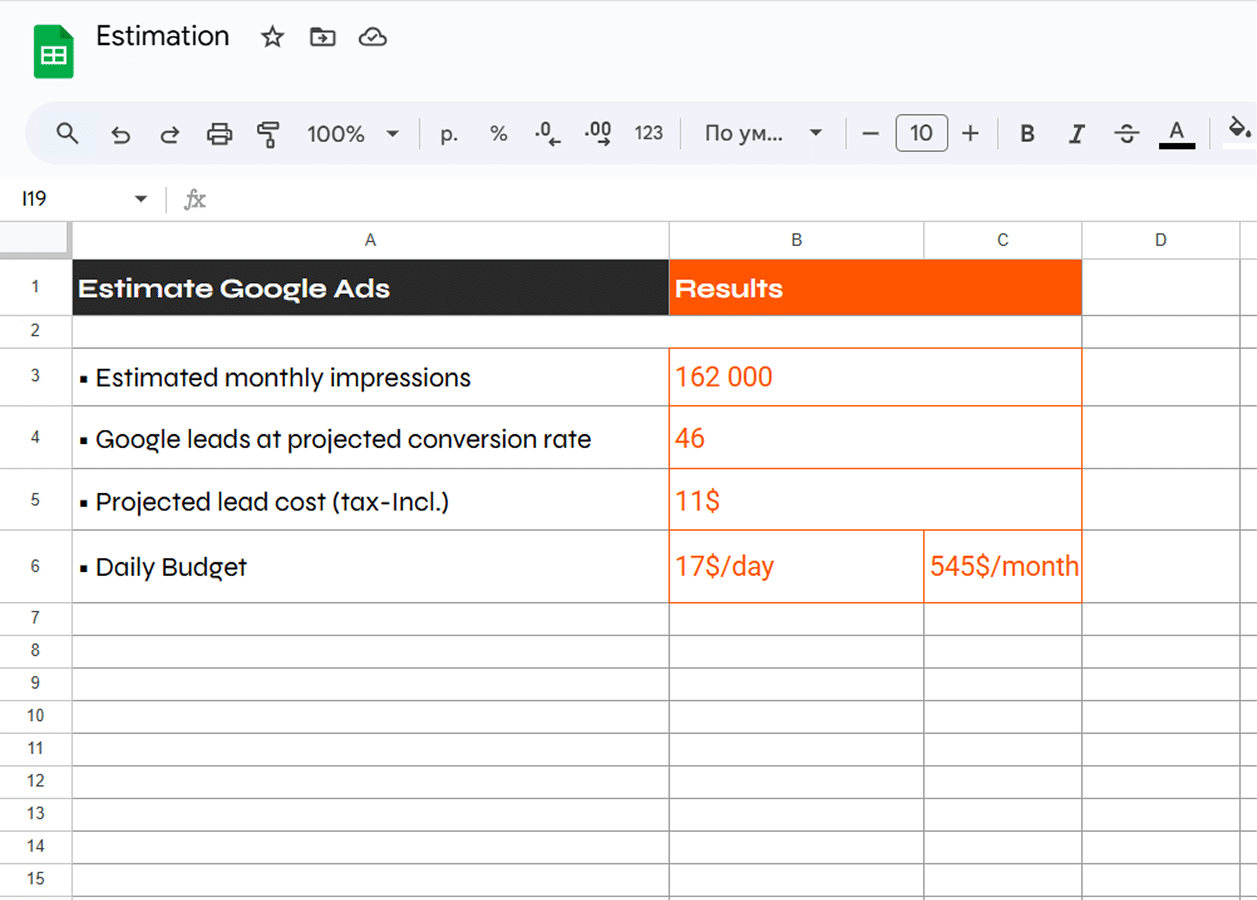
WEB ALTERNATIVE can prepare a free Google Ads forecast based on your services, locations, and goals. It may include estimated demand, budget, inquiries, and cost per lead. These are estimates rather than guaranteed outcomes.
Frequently asked questions
Should I choose an agency that has worked in my industry?
Relevant experience can help, especially when the agency understands your customers and sales process. Ask what it learned and how that experience applies to your business; no case study guarantees the same outcome.
Does a Google Partner badge guarantee results?
No. A badge or certification can be one factor in evaluating a provider, but it does not guarantee leads, sales, or profitability. Also assess the people managing your account, their plan, and their communication.
Who should pay Google for the ads?
Billing arrangements vary. Ask the agency to explain who pays Google, what appears on your invoice, and how you can verify spending. Record the arrangement in your agreement.
How quickly should I expect results?
There is no universal timeline. Ask for a review plan that reflects your budget, the volume of relevant traffic, reliable tracking, and the time your customers take to decide.
What if I already have an advertising account?
Ask the agency how it would review your existing campaigns and what access it needs. Your business should understand who controls the account and data before granting access or making changes.
Discuss your Google Ads goals
If you are considering an agency, talk with WEB ALTERNATIVE about your services, budget, and what you want your advertising to achieve.